
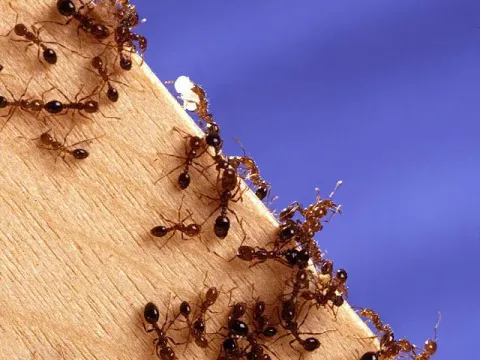
Fire ant
Solenopsis
The genus Solenopsis, commonly identified as fire ants, is not a crop but a highly invasive insect pest within the Formicidae family.
What the section contains


Fire ant
Native to South America, these ants have spread globally, thriving in diverse climates ranging from humid tropical zones to more temperate agricultural landscapes.
These insects prefer sunny, disturbed areas, making pastures, commercial farms, and irrigation-dependent croplands primary sites for their colonization.
Soil structure is critical for their development, as they build elaborate underground chambers that provide shelter from heat and excessive moisture during the rainy seasons.
They are known for their resilience and high reproductive rate, which allows them to quickly dominate an area once they establish a successful queen-colony connection.
Solenopsis ants inflict severe damage on agricultural production by feeding on the tender shoots and seeds of crops like corn, soybean, and citrus seedlings.
By tending to honeydew-producing insects such as aphids and mealybugs, they disrupt natural pest control cycles, leading to secondary outbreaks of plant-sucking insects.
Fire ants pose a significant occupational hazard to farmers due to their painful venomous sting, which can cause severe reactions in both humans and livestock.
Their physical presence and nest construction interfere with mechanical harvesting equipment, often leading to costly repairs and equipment downtime during the harvest season.
- Destruction of crop seeds in the soil
- Facilitation of aphid population growth
- Reduced germination rates of field crops
- Disruption of local ecosystem biodiversity