
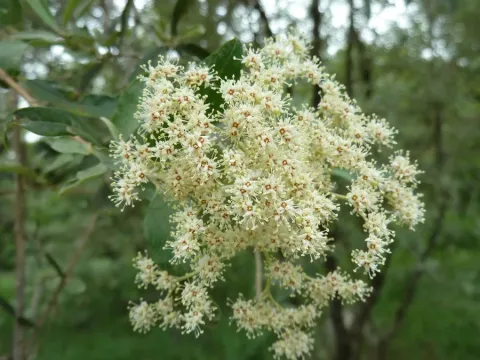
Buddleja saligna
Buddleja saligna
Buddleja saligna, commonly known as the false olive, is an evergreen shrub or small tree belonging to the Scrophulariaceae family. It is recognized for its dense foliage and unique, willow-like appearance which provides excellent wind protection.
What the section contains
Buddleja saligna
Originating from South Africa, this species thrives in a variety of environments, particularly in areas with warm, temperate climates. It is widely used in landscape restoration and agricultural perimeter planting due to its hardiness.
The cultivation of this plant requires full sun exposure to maintain its structural integrity and encourage vigorous growth. While it tolerates various soil types, it performs best in well-draining loamy or sandy soils.
Regarding agricultural management, the plant is relatively drought-tolerant once established. However, regular irrigation during the early stages of growth is essential to ensure a robust root system and future longevity.
It serves an important role as a nectar source for local pollinator populations. The wood is notably dense and hard, historically used for making tool handles and other durable farm implements.
Aphids represent a primary pest concern for Buddleja saligna, frequently colonizing the tender new growth during the spring season. Management usually involves monitoring and the application of insecticidal soaps.
Spider mites can be particularly damaging during hot, dry weather conditions, causing leaf discoloration and premature foliage drop. Regular water misting or acaricide application is recommended for infested specimens.
Root rot is a critical threat caused by poorly drained soils or excessive irrigation. To mitigate this risk, soil amendments such as organic compost and coarse grit should be incorporated during the initial planting phase.
Powdery mildew may manifest as a white dusting on leaves, especially in stagnant air environments. Proper spacing and thinning of inner branches help maintain the necessary airflow to prevent fungal proliferation.
Weevil larvae can occasionally affect the root health of younger plants. Maintaining a clean cultivation area and removing surrounding weeds helps reduce the likelihood of pest outbreaks in the shrub patch.