
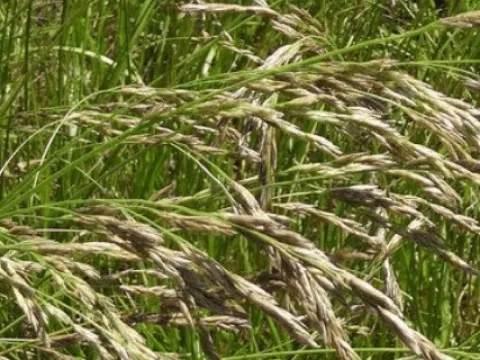
Festulolium
Schedolium
The optimal sowing time for Festulolium is early spring, which allows the plant to establish itself before the onset of summer heat, taking full advantage of residual soil moisture.
What the section contains
Festulolium
Late summer or early autumn seeding is also possible, provided there is enough moisture for germination, allowing the plants to develop a strong root system before winter dormancy.
Seeding rates typically range from 15 to 20 kg/ha, depending on the desired stand density and whether the crop is intended for intensive grazing or mechanical harvesting.
The seed should be planted at a shallow depth of 1–2 cm, ensuring good soil-to-seed contact, which is crucial for quick and uniform emergence in various field conditions.
Proper seedbed preparation, including firming the soil and removing weeds, significantly increases the likelihood of a successful establishment and a high-yielding meadow.
Festulolium is a man-made hybrid combining the rapid growth and high nutritional quality of ryegrass with the robust environmental resilience and stress tolerance of fescue.
The crop is highly versatile and performs well on a wide range of soil types, showing excellent tolerance to slightly acidic and periodically waterlogged soil conditions.
It is known for its superior winter hardiness, allowing it to remain productive in colder regions where standard ryegrass varieties would suffer from significant winterkill.
Nitrogen fertilization is essential for maximizing yield, as the crop is highly responsive to split applications of nitrogen throughout the active growing season.
While Festulolium is more drought-tolerant than traditional ryegrass, maintaining adequate soil moisture is key to achieving its full genetic potential for biomass production.
The crop is recognized for its exceptional regrowth capacity, often capable of producing 3 to 5 cuts per season under intensive management and favorable fertility levels.
Dry matter yields are consistently high, making it a preferred choice for silage and haylage production in high-performance dairy and livestock operations.
The forage quality remains high even after the early heading stage, providing a better energy-to-protein balance compared to pure fescue stands, which tend to lignify faster.
In grazing scenarios, Festulolium provides a palatable and nutritious forage that promotes healthy livestock weight gain and supports high milk production levels.
Longevity is a hallmark of this hybrid; a well-managed stand can remain productive for several years, providing long-term economic value to the farming enterprise.
Like most forage grasses, Festulolium can be susceptible to rust diseases and other fungal pathogens, particularly in humid or stagnant air conditions.
Snow mold can pose a challenge in regions with prolonged snow cover, so selecting improved, disease-resistant varieties is a critical first line of defense for the farmer.
Insect pests, such as grass flies, can impact young stands, requiring regular scouting during the seedling stage to prevent significant stand thinning or loss.
Maintaining a healthy, vibrant stand through proper mowing heights and balanced nutrition helps the grass naturally resist the encroachment of less desirable weed species.
Seed treatment with systemic fungicides is strongly recommended to protect emerging plants during their most vulnerable period against soil-borne and seed-borne pathogens.
For high-quality forage, the first cut should be taken at the beginning of the heading stage, ensuring the ideal ratio between yield and nutrient density.
Mowing height should be maintained at 6–8 cm above the ground to preserve the basal nodes, which are vital for rapid regrowth and stand persistence throughout the year.
When ensiling, wilting the forage to the correct dry matter content is important to facilitate optimal fermentation and prevent nutrient losses in the silo or bale.
Rotational grazing systems allow for better control over forage intake and rest periods, ensuring that the Festulolium remains in its most palatable state for the animals.
Avoiding the temptation to delay harvest is critical, as allowing the crop to mature too far leads to a drop in digestibility and a lower energy value in the final forage.