
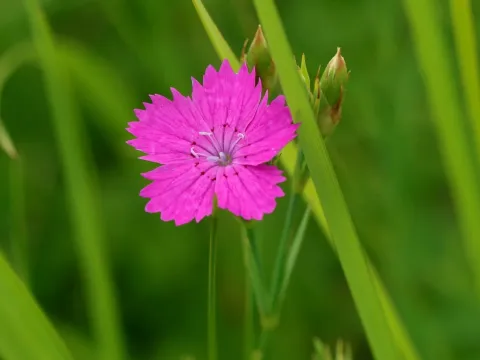
Fischer's Pink
Dianthus fischeri
Fischer's Pink (lat. Dianthus fischeri) belongs to the Caryophyllaceae family. It is a perennial herbaceous plant typically propagated by seeds or vegetative division in agricultural settings.
What the section contains
Fischer's Pink
Sowing seeds in a protected environment is recommended from late March to early April to ensure strong seedlings before transplanting into the open field.
In regions with milder climates, late-autumn sowing directly into prepared soil is possible, which promotes natural stratification and earlier flowering in the following season.
The optimal temperature for seed germination ranges from +18 to +20 degrees Celsius, with emergence usually occurring within 10–14 days under constant humidity.
Once two pairs of true leaves have developed, seedlings should be pricked out into individual containers to provide sufficient space for root system development.
This crop prefers open, sunny locations, as shaded conditions lead to leggy stems and a noticeable decrease in the aesthetic quality of the blooms.
Successful growth requires light, well-drained soils with a neutral or slightly alkaline pH to prevent moisture stagnation near the root collar.
The species exhibits good winter hardiness, though in regions with severe, snowless winters, light mulching of the root zone is advised to protect the plant.
Regular watering is essential during the active growing phase and bud formation, but excessive moisture must be avoided to prevent root rot.
During the vegetation period, the plant responds well to balanced mineral fertilizers, although excessive nitrogen should be avoided to prevent vegetative overgrowth.
The primary threats include fungal diseases such as fusarium wilt and leaf spots, which thrive in conditions of poor air circulation and excessive soil moisture.
To prevent pathogen spread, it is crucial to follow crop rotation practices and avoid overly dense planting to ensure natural ventilation between individual plants.
Common pests include spider mites and carnation leafrollers, which can damage leaves and significantly weaken the plant's overall vitality.
Preventive measures involve regular field monitoring and the application of biological insecticides, especially during high pest activity periods.
- Regular inspection of the plant canopy.
- Removal of weeds that serve as disease reservoirs.
- Maintaining optimal spacing for air movement.
The main commercial use of Fischer's Pink lies in its value as a high-quality cut flower and its decorative role in large-scale landscaping projects.
Harvesting for floral arrangements should be done early in the morning or late in the evening when buds are just beginning to open to maximize vase life.