
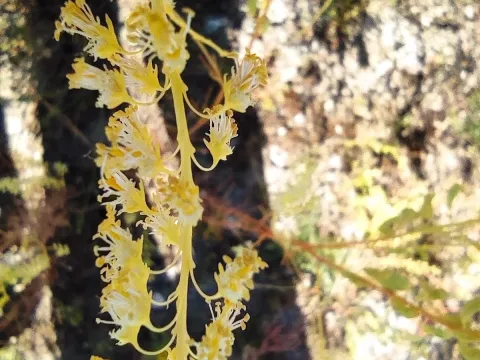
Reseda stricta
Reseda stricta
Sowing of Reseda stricta typically occurs in early spring, once the soil has warmed sufficiently, ensuring the seeds can establish quickly in the warming environment.
What the section contains
Reseda stricta
Due to the small size of the seeds, they should be sown shallowly, ideally not deeper than 1–2 centimeters, to facilitate proper germination without exhausting the embryo.
Row planting with spacing of 30 to 45 centimeters is recommended to allow for adequate airflow and to simplify mechanical weeding operations during the early stages.
Using high-quality, certified seeds is crucial for achieving uniform emergence, especially when soil temperature and moisture levels are slightly sub-optimal.
In regions with mild winter climates, fall sowing can be attempted, which often results in stronger root systems and earlier flowering in the following season.
Reseda stricta, a member of the Resedaceae family, thrives in open, sunny environments, reflecting its evolutionary adaptation to arid or semi-arid natural habitats.
The plant demonstrates a strong preference for well-drained, sandy or loamy soils, which prevent the accumulation of excess water around the delicate root system.
Regarding soil pH, the crop prefers neutral to slightly alkaline conditions, which support the uptake of essential nutrients necessary for healthy biomass production.
Though tolerant of dry conditions, optimal growth for commercial yield purposes is best achieved with consistent moisture during the peak vegetative stage.
Rotation is a vital component of successful management, as planting Reseda in fields previously used for cereal crops helps break potential pest cycles.
Yield components for Reseda stricta depend largely on the density of the stand and the timing of the harvest relative to the flowering peak.
Under favorable climatic conditions and proper fertilization, the crop produces a significant amount of vegetative mass suitable for various industrial extractions.
Harvesting usually involves cutting the aerial parts of the plant, ensuring that the basal buds are preserved to encourage potential secondary regrowth.
Post-harvest management involves rapid drying of the raw material to prevent microbial degradation and preserve the integrity of secondary metabolites.
Farmers can expect a consistent output by employing precision agriculture techniques, such as targeted fertilization and efficient weed management strategies.
The crop is occasionally susceptible to flea beetles, which can cause significant foliar damage, particularly during the early seedling stage of development.
Fungal infections, often manifested as root rots, represent the most significant threat if the soil remains waterlogged for extended periods during the growing season.
Aphids can also colonize the inflorescences, necessitating close monitoring to ensure that their feeding does not negatively impact the overall crop quality.
Preventative measures, including ensuring proper soil drainage and maintaining strict weed control, remain the most effective tools for managing these threats.
Integrated pest management (IPM) practices should be prioritized to mitigate the reliance on synthetic chemicals and maintain the purity of the harvested crop.