
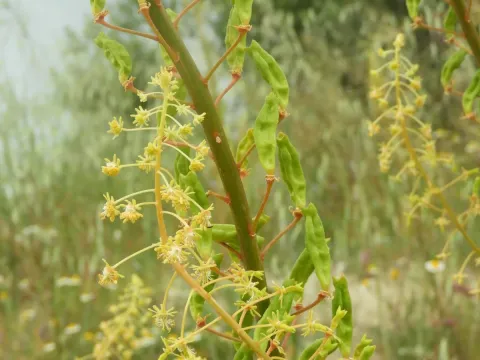
Reseda lanceolata
Reseda lanceolata
Reseda lanceolata is a member of the Resedaceae family. Successful cultivation begins with early spring sowing, as the seeds require soil temperatures between 8 and 10 degrees Celsius to initiate germination. It is a crop that thrives when sown in well-prepared, fine-textured seedbeds.
What the section contains
Reseda lanceolata
The optimal sowing density is achieved using rows spaced 30 to 45 cm apart. This spacing is vital for the crop to develop robust stems and allows for efficient mechanical weed control during the initial growth phases, ensuring the crop does not compete with weeds for resources.
Seeds should be sown at a shallow depth of 1 to 2 cm. Due to their small size, the soil must be firmed after sowing to promote capillary water movement, which is essential for uniform emergence across the field. Proper seedbed preparation is the foundation of high-yield production.
Winter sowing is sometimes practiced in regions with mild climates to take advantage of spring moisture. Plants that emerge early demonstrate enhanced root system development, which helps them survive potential dry spells during the peak of the summer season.
Selecting appropriate crop rotation partners is essential for avoiding soil-borne issues. Legumes or cereals serve as excellent predecessors, as they leave the soil structure in an optimal condition for the relatively small-seeded Reseda lanceolata.
The crop is highly light-demanding and performs best in open, sunny fields. Reduced sunlight leads to etiolation, where the plant grows tall and weak, resulting in a lower concentration of specialized metabolites and lower overall crop quality.
Reseda lanceolata requires light, well-drained soils, such as sandy loams, with a neutral to slightly alkaline pH. Soils with poor drainage are unsuitable, as the plant is susceptible to root diseases if the soil remains waterlogged for extended periods.
While the plant has moderate drought tolerance, adequate moisture is critical during the active vegetative growth phase. Irrigation should be managed to keep the soil moist but not saturated, supporting consistent development throughout the plant life cycle.
Ideal temperatures for growth fall between 18 and 25 degrees Celsius. Extreme heat or sudden cold snaps can disrupt the development of reproductive parts, so site selection should avoid low-lying areas where cold air might settle during the night.
Fertilization management focuses on a balanced supply of macro-nutrients. Applying phosphorous and potassium early in the season encourages vigorous root growth and aids in the development of the flowering spikes, which are often the primary commercial objective.
Cruciferous flea beetles are the most significant early-season pest for this crop. They can decimate a stand within days, necessitating the use of systemic insecticides or protective netting if the pest pressure exceeds sustainable levels during emergence.
Powdery mildew is a common fungal disease that appears when air circulation is poor or humidity remains high for several consecutive days. Preventive strategies include maintaining proper plant spacing to ensure airflow and monitoring for the first signs of infection.
Root rots caused by soil-borne pathogens can occur if water management is improper. To mitigate this risk, farmers must adhere to a strict crop rotation policy, ensuring that the field is not replanted with Resedaceae species for at least three to four years.
Aphids can cause damage by feeding on the sap of young inflorescences, leading to distorted growth and reduced harvest quality. Monitoring the field and applying bio-pesticides or targeted treatments is recommended when aphid colonies start to multiply.
Effective weed management is also a form of pest prevention, as many weeds act as reservoirs for viruses that can be transmitted to the crop by insect vectors. Maintaining a clean field environment is essential for the long-term health of the plantation.