
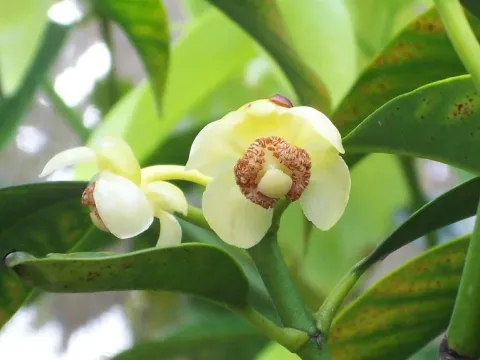
Rheedia
Rheedia
Rheedia is a genus of evergreen trees and shrubs belonging to the Clusiaceae family. In modern taxonomy, many species formerly classified under this genus are now often integrated into the genus Garcinia. These plants are known for their thick, coriaceous leaves and the presence of a characteristic latex-like sap throughout their tissues.
What the section contains
Rheedia
The native habitat of Rheedia encompasses the tropical regions of Central and South America. These plants thrive in humid tropical environments where temperatures remain stable year-round. Successful cultivation requires a sheltered location protected from strong winds, especially for young saplings.
Soil requirements for Rheedia emphasize well-drained, fertile loams rich in organic matter. The plant is highly sensitive to waterlogging, which can quickly lead to root rot. Therefore, plantation layout must include proper drainage solutions to maintain soil aeration and plant health.
The optimal temperature range for Rheedia is between 22 and 30 degrees Celsius. The plant cannot withstand temperatures below 10 degrees Celsius, and even light frost can cause irreversible damage. Consequently, commercial farming is strictly limited to tropical latitudes or climate-controlled environments.
Regular and sufficient watering is essential, particularly during the flowering and fruit-setting stages. Modern irrigation systems, such as drip lines, are highly recommended in professional orchards to ensure consistent moisture levels without saturating the soil and risking fungal pathogen development.
Rheedia is primarily cultivated for its edible fruits, which are prized for their unique sweet-and-sour flavor profile. These fruits are consumed fresh or processed into juices, jellies, and desserts, contributing to their high value in local tropical markets.
Besides fruit production, the wood of certain Rheedia species is valued for its durability. It is used in local carpentry and for manufacturing small tools or household items, providing an additional economic utility to the trees within agricultural systems.
Yield capacity is dependent on the tree's age and the management practices employed. Mature trees can provide substantial annual harvests, although the ripening process is often staggered over several months, necessitating selective harvesting rather than a single massive collection.
Harvesting requires significant manual labor and care, as the skin of the fruit is delicate and prone to bruising. Each fruit must be picked individually to prevent mechanical damage, which is crucial for maintaining post-harvest quality and extending shelf life for transport.
The global demand for exotic tropical fruits presents a growth opportunity for Rheedia farming. Ongoing research into high-yielding varieties with improved post-harvest stability is essential for integrating this crop more widely into the international fruit supply chain.
Typical pests affecting Rheedia include various scale insects and mealybugs that target the young shoots and foliage. Effective management relies on regular field scouting and the application of integrated pest management practices to control populations before they reach economic damage thresholds.
Fungal diseases, such as anthracnose, pose a significant risk to foliage and ripening fruit, particularly in high-humidity conditions. Maintaining tree canopy health through pruning is vital to improve airflow and reduce the moisture accumulation that favors fungal growth.
Root rot is a critical threat often associated with poor drainage or excessive irrigation. Once established, this condition can rapidly kill trees, making soil moisture management the highest priority for farm managers in tropical settings.
Balanced fertilization programs are necessary to maintain plant vigor and natural resistance to pests. Nutritional deficiencies, especially of trace elements, can lead to chlorosis and stress, making the tree more susceptible to secondary infections and environmental challenges.
- Regular sanitary pruning to remove infected or dead wood.
- Monitoring of leaves for signs of sap-sucking pests.
- Application of mulch to maintain moisture and soil health.