
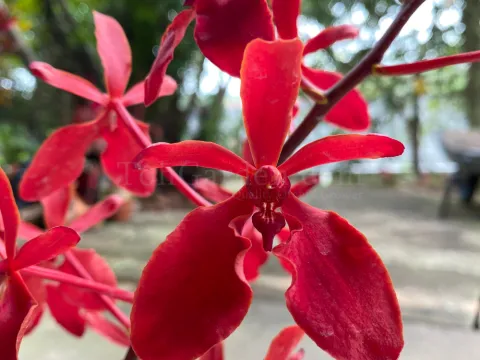
Renantanda
x Renantanda Hort.
Renantanda (x Renantanda) is a fascinating intergeneric hybrid orchid derived from the crossing of the Renanthera and Vanda genera. Belonging to the Orchidaceae family, this plant is valued for its striking, long-lasting floral spikes and vigorous growth habit in tropical environments.
What the section contains
Renantanda
To cultivate Renantanda successfully, growers must provide extremely high light levels, similar to the requirements of the Vanda genus. Direct sunlight, especially during morning hours, is essential to stimulate the formation of inflorescences and maintain deep pigmentation in the petals.
Temperature management is critical for this hybrid, which thrives best in tropical climates ranging from 22 to 30 degrees Celsius. It requires stable temperatures and should be protected from sudden cold drafts, which may cause premature flower drop.
High relative humidity, typically between 70% and 80%, is vital for the health of its extensive aerial root system. Regular misting or the use of automated humidification systems is necessary to prevent the dehydration of the roots in indoor conditions.
The cultural substrate for Renantanda is minimal or entirely absent. It is standard practice to hang these orchids in open wooden baskets or to mount them on blocks, ensuring maximum aeration for the roots to prevent fungal rot caused by moisture stagnation.
The primary threats to Renantanda include root and stem rots caused by overwatering or poor ventilation. If the roots remain wet for extended periods, they become susceptible to pathogens, which can rapidly compromise the integrity of the plant.
Insect pests such as spider mites and scale insects are common in greenhouse environments. These pests feed on the succulent leaves, extracting vital nutrients and leaving the plant vulnerable to secondary bacterial and fungal infections.
Mealybugs are also problematic, often hiding in the complex junctions of the leaves and stems. Persistent manual inspection and the application of targeted systemic insecticides are necessary to control these infestations effectively.
Nutrient toxicity, resulting from the over-fertilization of the root zone, is a common physiological threat. Accumulation of salts can burn the roots and disrupt the osmotic balance, leading to yellowing leaves and impaired growth cycles.
Disease prevention relies on maintaining a clean growing environment and providing consistent airflow. Regular sanitization of all tools used during pruning or repotting is essential to prevent the mechanical transmission of viruses and pathogens.