
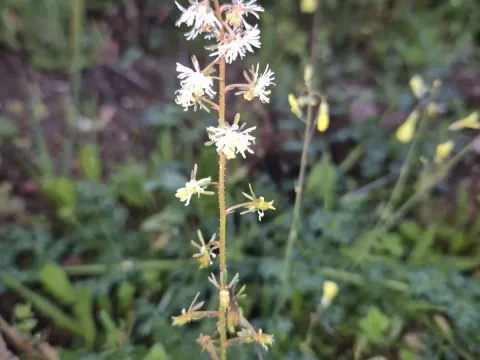
Reseda media
Reseda media
Reseda media is an herbaceous plant species belonging to the Resedaceae family. Successful cultivation begins with precise sowing practices, typically performed in early spring when the soil temperature consistently reaches 8–10 degrees Celsius to support germination.
What the section contains
Reseda media
The seeds are small and sensitive to planting depth; therefore, they should be covered with a thin layer of soil, no more than 1–1.5 cm. Row seeding is recommended with spacing of 30–45 cm, which provides enough room for the development of the basal leaf rosette.
In temperate regions, autumn sowing is not typically practiced due to the risk of frost damage to young seedlings. However, in regions with milder winters, early autumn planting may be feasible if the plants have enough time to establish before the ground freezes.
Achieving a plant density of 500,000 to 700,000 plants per hectare is ideal for maximizing yield. Ensuring high-quality, viable seeds is essential to achieve a uniform plant stand and to avoid the need for costly replanting.
Surface crusting after rain can be a major barrier for seedling emergence in Reseda media. Implementing timely inter-row cultivation helps break this crust and promotes oxygen access to the root zone, significantly improving overall emergence rates.
Reseda media thrives in well-drained, light-textured soils such as sandy loams, which prevent the risk of root rot from waterlogging. It performs best in soils with a neutral or slightly alkaline pH, avoiding heavily compacted or acidic conditions.
The plant is moderately drought-tolerant but requires consistent moisture during the peak vegetative growth phase. Excessive irrigation, especially during the flowering stage, should be avoided to prevent qualitative degradation of the harvested material.
As a light-loving species, Reseda media requires full sun exposure to produce high concentrations of beneficial oils and secondary metabolites. Shaded environments negatively impact the plant's structural integrity and its chemical composition.
The ideal climate for this crop is characterized by moderate temperatures throughout the growing season. While it can tolerate minor fluctuations, prolonged periods of extreme heat coupled with low atmospheric humidity can stress the plant and reduce yields.
Fertilization management focuses on a balanced supply of phosphorus and potassium, which are critical for root development and overall plant resistance. Excessive nitrogen application is discouraged as it tends to favor green leaf growth at the expense of oil quality.
Downy mildew is one of the most common diseases affecting Reseda media, particularly in dense stands with high humidity levels. Managing plant spacing and ensuring adequate field aeration are essential cultural practices to mitigate the spread of this pathogen.
Cruciferous flea beetles represent a major pest threat, especially to young, succulent seedlings. If left unchecked, these insects can cause significant stand loss, requiring the use of integrated pest management strategies to protect the early growth stages.
Root rot diseases are primarily associated with poor soil drainage and failure to follow proper crop rotation cycles. It is recommended to avoid planting Reseda on the same field for at least three to four years to break the infection cycle of soil-borne pathogens.
Regular field scouting is crucial, especially during the budding and flowering periods. Identifying pest infestations early allows for targeted interventions, reducing the need for broad-spectrum pesticide applications and protecting beneficial insect populations.
Weed control is vital during the early establishment phase to prevent competition for nutrients and light. A clean field not only improves the growth of Reseda media but also removes alternative hosts for various insects and plant diseases.
Harvesting should be timed to coincide with the period of peak bloom, as this is when the secondary metabolites and oils in the foliage are most concentrated. Early or late harvesting can significantly decrease the commercial value of the crop.
The crop is typically cut with mechanical mowers at a height of 10–15 cm. Efficient transport from the field to the processing facility is mandatory to prevent enzymatic breakdown or degradation of the volatile compounds in the freshly cut plant material.
Once harvested, the plant mass should be handled carefully to avoid self-heating, which can occur if the material is piled too densely. Drying should be performed in well-ventilated areas or specialized dryers at temperatures not exceeding 40 degrees Celsius.
Yields of Reseda media depend heavily on soil quality and the timing of agronomic interventions, generally ranging from 10 to 20 quintals of dry mass per hectare. Consistency in production relies on maintaining a rigorous harvesting schedule.
Post-harvest management involves clearing field residues to prevent the accumulation of pathogens. Incorporating remaining organic matter into the soil through deep tillage helps restore fertility and prepares the field for the subsequent crop in the rotation.