
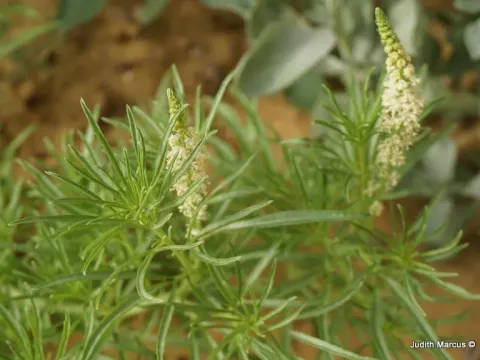
Reseda stenostachya
Reseda stenostachya
Reseda stenostachya is a specialized plant species belonging to the Resedaceae family. Historically adapted to arid regions, it displays remarkable resilience to high temperatures and water scarcity, making it a unique subject for cultivation in challenging climatic zones.
What the section contains
Reseda stenostachya
The crop thrives in well-aerated, sandy-loam soils with low moisture retention. Soil preparation should focus on ensuring deep drainage, as the species is highly susceptible to root decay if the substrate remains waterlogged for extended periods.
Environmental requirements include a high intensity of solar radiation throughout the growing season. The plant requires long daylight hours to progress through its reproductive phases successfully, as shortened photoperiods may inhibit proper flower development.
Regarding agrotechnical practices, weed control is essential during the early stages of establishment to prevent competition for light and soil nutrients. Once the root system is well-established, the plant demonstrates improved competitive capacity against invasive species.
From a хозяйственное perspective, this species is investigated for its potential in producing natural pigments and essential oils. Its ability to grow on marginal lands makes it a candidate for sustainable agriculture in environments where traditional cereal crops may fail.
Common phytosanitary threats include fungal pathogens such as downy mildew and various species of root-inhabiting fungi. Integrated pest management strategies are advised, emphasizing soil health and spatial distribution of plants within the field.
Insect pests such as larvae of certain Lepidoptera species can cause defoliation. Regular monitoring during the peak growth season is crucial to prevent threshold levels of damage, ensuring the integrity of both leaf surface and floral structures.