
Rhagodia
Rhagodia
Rhagodia is a genus of evergreen shrubs and semi-shrubs belonging to the Amaranthaceae family. Originating from Australia, these plants are well-known for their exceptional ability to thrive in arid environments, often serving as pioneer species in degraded or saline soils.
What the section contains
Rhagodia
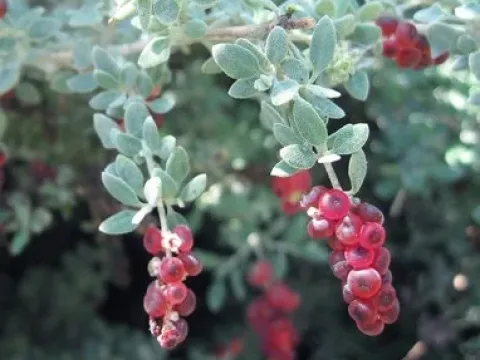
The botanical characteristics of Rhagodia include leaves often covered with a mealy, grayish-white indumentum. This feature is a physiological adaptation that reduces water loss through transpiration and protects the plant from intense solar radiation and heat stress common in their native habitats.
Regarding climate and soil, Rhagodia is remarkably versatile. It prefers well-drained, alkaline, or saline soils and exhibits high tolerance to drought. It is rarely demanding in terms of soil nutrients, performing well in stony or sandy substrates where other plants struggle to establish.
In agronomic practice, Rhagodia is often utilized for land reclamation, soil erosion control, and the establishment of windbreaks. Its high salt tolerance makes it an excellent candidate for rehabilitating coastal areas or inland sites affected by soil salinity, helping to restore ecological balance.
The cultural use extends to landscape architecture, where Rhagodia is prized as a decorative shrub for hedging or ground cover. Its resilience to pruning allows it to be maintained in specific shapes, making it a functional and aesthetic choice for sustainable landscaping projects in dry climates.
The primary pests affecting Rhagodia include aphids, which tend to cluster on soft, new-growth shoots. Integrated pest management, focusing on biological controls or targeted sprays, is generally sufficient to manage infestations without causing harm to the environment or the plant's structural integrity.
Root rot is the most significant threat to Rhagodia, usually resulting from overwatering or inadequate soil drainage. As a xerophytic plant, it requires soil to dry out between watering sessions to prevent the proliferation of pathogenic fungi that target the root system.
Powdery mildew may occur in poorly ventilated areas with high humidity, especially if the planting density is too high. Improving airflow through structural pruning is the most effective preventative measure against this fungal disease, ensuring a healthier and more robust canopy.
Occasional herbivory by caterpillars can occur, but typically, these pests do not reach threshold levels that require intensive chemical control. The plant's natural growth vigor often allows it to recover quickly from minor foliage damage caused by common garden insects.
Maintaining the overall health of Rhagodia is relatively simple compared to more sensitive horticultural crops. By providing proper spacing and ensuring the plant is situated in a location with excellent sunlight exposure, growers can minimize almost all common pathological risks.