
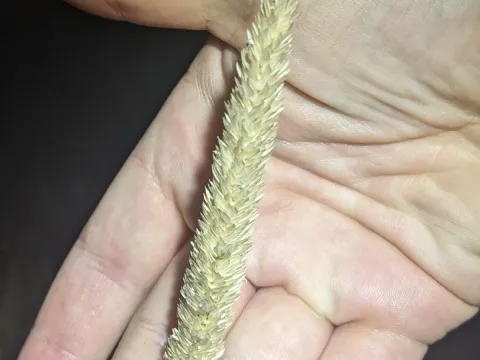
Reed canary grass
Typhoides
Reed canary grass (Phalaris arundinacea) is a hardy perennial grass species belonging to the Poaceae family. It is typically established via seed or rhizome cuttings in early spring when soil temperatures allow for active root development.
What the section contains
Reed canary grass
The seeding rate is usually between 8 and 12 kg per hectare, depending on the specific seed quality and the intended density of the future stand. Seeds should be sown shallowly, ideally at a depth of no more than 1–2 cm.
Firming the soil after sowing using a cultipacker or roller is essential to ensure good seed-to-soil contact, as the grass needs consistent moisture to germinate effectively.
Because of its vigorous rhizomatous growth, the plant quickly forms a sod-forming cover. This makes it an ideal candidate for soil stabilization on embankments and riparian buffer zones.
Once established, it creates a dense canopy that effectively competes with weeds, reducing the need for chemical herbicide interventions in mature stands.
This species is highly adaptable to wet environments, thriving in soil conditions that are too saturated for most other crops. It can tolerate seasonal flooding for extended periods.
It prefers fertile, moist soils such as heavy loams or organic-rich peat soils. It exhibits a broad pH tolerance, effectively growing in soils ranging from 5.5 to 7.5 on the pH scale.
Reed canary grass is exceptionally cold-hardy, surviving even harsh winter conditions. It is known for its rapid spring regrowth, which provides early green feed for livestock.
While it thrives in nitrogen-rich soils, it can grow in a variety of conditions if moisture is not limiting. It shows high responsiveness to nitrogen fertilization for biomass production.
Light availability is important, though it performs better than many other grasses under partial shade, particularly in river floodplains where it often dominates the flora.
Reed canary grass is highly productive, with yields ranging from 4 to 8 tonnes of dry matter per hectare under favorable management practices and sufficient moisture.
Annual yields can be maximized through a two-cut system. Early harvesting ensures better protein content, whereas later harvesting focuses on total biomass for industrial or biofuel purposes.
The crop is known for its longevity, capable of producing high yields for over a decade if the nutrient balance is maintained through regular fertilization.
Fertilizer application, specifically nitrogen, is the primary driver of biomass yield. Without proper management, growth rates can stagnate over time.
In terms of forage quality, early harvest cycles yield high-digestibility silage, making it a reliable staple in livestock feeding programs in temperate regions.
The plant is naturally resistant to many common pests, which is one of the primary reasons for its agricultural popularity and minimal requirement for pesticide use.
In highly humid or stagnant conditions, fungal infections such as rust or powdery mildew may appear, though they rarely result in total crop failure.
The risk of pest damage is significantly lower compared to other cereal crops, largely due to the presence of secondary metabolites within the leaves of the plant.
Integrated pest management involves proper field drainage and avoiding overly dense plantings, which helps maintain airflow and reduces the likelihood of disease outbreaks.
Regular inspection during the peak growth season allows for early detection of potential stress indicators, ensuring long-term field health.
Timing is critical for harvesting reed canary grass. To achieve high forage quality, it must be harvested before the head emergence, while leaves are still tender.
If harvested too late, the high cellulose and lignin content makes the stems tough, significantly reducing the voluntary intake for cattle and other livestock.
Drying the harvested material for hay can be challenging due to the plant's high water retention, requiring efficient turning and favorable weather conditions.
When used for bioenergy, harvesting should take place when the plant reaches maturity and moisture content naturally decreases, typically late in the season.
Seed harvesting requires careful attention, as the seeds shatter easily when mature. Swathing is often necessary to avoid significant yield losses during the collection process.