
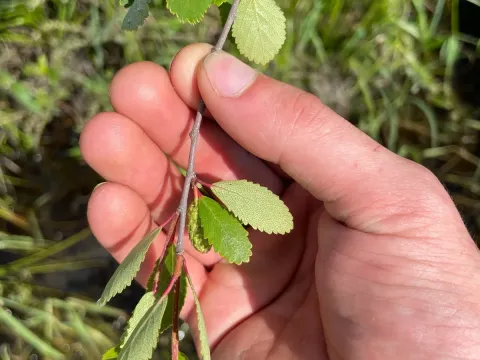
Resin birch
Betula glandulifera
Resin birch (Betula glandulifera) is a shrub or small tree belonging to the Betulaceae family. Native to North America, this species is typically found in wetlands, bogs, and coniferous forests, thriving in acidic and nutrient-poor soil conditions where other species often fail.
What the section contains
Resin birch
The plant is highly resilient and adapted to harsh northern climates. Its primary requirement is a consistently moist soil environment. It can tolerate acidic bog conditions and is known for its ability to stabilize substrates in waterlogged areas, making it a valuable species for ecological restoration.
Botanically, Betula glandulifera is characterized by its resinous glands on the young twigs, which provide the plant with a sticky texture. The leaves are typically smaller and leathery, an evolutionary adaptation that allows the plant to conserve moisture in specialized growing environments.
Silvicultural management focuses on maintaining appropriate site conditions to support natural regeneration. Because the species is well-adapted to its native habitat, it generally requires low maintenance, provided that the hydrological balance of the planting site is properly preserved.
The economic and ecological utility of resin birch is centered on land reclamation and reforestation projects. It serves as a keystone plant in wetland ecosystems, contributing significantly to biodiversity and serving as a pioneer species in the colonization of wet, abandoned lands.
Common threats to Betula glandulifera include fungal pathogens such as leaf rust and various types of wood-decay fungi. These diseases are most prevalent in areas with high humidity, which is typical for the natural range of this birch species, requiring careful monitoring.
Insect pests, including leaf-mining beetles and various lepidopteran larvae, pose a significant risk to the foliage. Severe infestations can weaken the trees and lead to reduced growth rates, necessitating integrated pest management strategies to ensure the long-term health of the stand.