
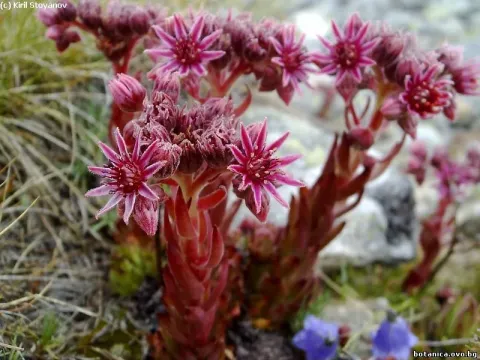
Reddish houseleek
Sempervivum erythraeum
Sempervivum erythraeum, a member of the Crassulaceae family, is most commonly propagated through vegetative means by separating the offsets or "chicks" from the main rosette. This method ensures rapid establishment and maintains the exact characteristics of the parent plant.
What the section contains
Reddish houseleek
If choosing to grow from seed, sow the seeds in late winter or early spring using a very light, well-draining sandy substrate. The seeds are small and should be sown on the surface without being covered, as they require light to germinate effectively.
Provide a steady environment with temperatures around 20–22 degrees Celsius and consistent light. Germination is slow, and the soil should be kept lightly moist, using a fine mister to prevent displacing the tiny seeds.
Once the seedlings have developed their first true leaves, they should be pricked out into small containers. They need to be handled gently to avoid damaging the delicate root systems that are just beginning to develop.
Acclimatization of young plants to outdoor conditions should be done gradually. Once they are hardened off, they can be planted in their permanent location, where they will eventually form dense, attractive mats of foliage.
The reddish houseleek is a low-maintenance plant that thrives in poor, rocky, or sandy soils. It is essential that the substrate provides excellent drainage, as the species is highly susceptible to rot if it remains in waterlogged conditions.
Full sun is a requirement for this succulent to maintain its compact form and vibrant leaf pigmentation. In shaded conditions, the rosettes will become elongated and lose their characteristic intense coloring, reducing their overall ornamental value.
This plant is exceptionally hardy and capable of surviving extreme temperature variations, from hot, dry summers to sub-zero winter temperatures. Its succulent leaves store moisture efficiently, allowing it to withstand prolonged drought without supplemental watering.
Agricultural maintenance is minimal; the plant does not require high levels of nutrients. Over-fertilization, especially with nitrogen, should be avoided as it leads to succulent tissue becoming too soft and vulnerable to winter damage.
Planting density should allow for expansion, typically placing rosettes about 15 cm apart. With proper conditions, the plant will naturally spread by producing stolons, eventually creating a durable and visually appealing ground cover.
The primary threat to Sempervivum erythraeum is root rot caused by stagnant water in the soil. Ensuring the planting site is slightly elevated or includes a gravel base is the best preventative measure against this physiological issue.
Pests such as aphids or mealybugs can occasionally infest the center of the rosettes, where they extract sap from the tender tissues. If an infestation occurs, application of an appropriate systemic insecticide is recommended.
Fungal diseases like leaf spot may occur if air circulation is insufficient, particularly in humid regions. Keeping the rosettes free of decaying plant matter and ensuring good spacing between individuals will significantly reduce this risk.
The plant's health is easily monitored by the firmness and color of the leaves. A healthy specimen will have firm, tightly packed leaves, whereas a struggling plant may show signs of yellowing or soft, limp foliage at the base.
Winter dormancy provides natural protection, but severe ice buildup can cause damage to the rosettes. Monitoring for heavy ice accumulation is advisable, though the plant is generally robust enough to recover from minor winter stress.