
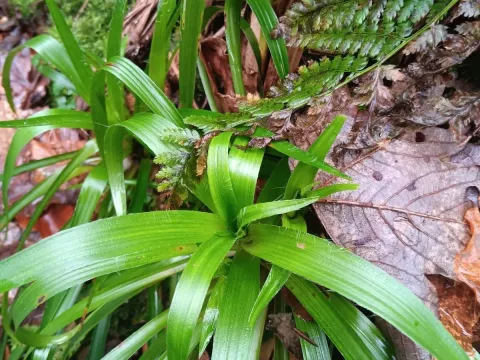
Greater wood-rush
Luzula sylvatica
Greater wood-rush (Luzula sylvatica) is a robust perennial member of the Juncaceae family. It is widely recognized for its wide, glossy, dark green leaves that maintain their aesthetic appeal throughout the year, making it a valuable plant in landscape horticulture.
What the section contains
Greater wood-rush
Originating from the woodland regions of Europe, the plant is naturally adapted to shaded environments. In agricultural and ornamental practice, it thrives best in cool, humid climates where it can receive indirect sunlight or full shade throughout the growing season.
Soil requirements for Luzula sylvatica are quite specific: it prefers acidic, humus-rich, and moisture-retentive soils. It is not suitable for dry, sandy sites unless significant amendments are made to improve water retention and nutrient content.
Regarding climate, the plant exhibits excellent winter hardiness. It is well-suited for temperate regions where winter temperatures drop significantly, as it remains evergreen in most conditions, providing a green carpet when other plants are dormant.
Maintenance is minimal once the plant is established. It is advisable to clean the foliage in late winter or early spring by removing old, damaged leaves to encourage new growth. It does not require intensive fertilizing, as excessive nutrients may harm its natural growth habit.
Luzula sylvatica is noted for its high resistance to common plant diseases. It is rarely affected by the viral or bacterial pathogens that typically plague more sensitive agricultural crop varieties, thanks to its resilient biological structure.
The primary threat to the health of the plant is poor site drainage. If the soil remains waterlogged for prolonged periods, the root system may become susceptible to rot, which eventually manifests as leaf chlorosis and plant decline.
Pest issues are generally negligible for this species. However, in gardens with high humidity, slugs and snails may occasionally graze on the foliage. This damage is typically localized and rarely impacts the long-term survival of the plant.
Cultural control, such as maintaining proper plant spacing to ensure airflow, is the best strategy against potential infestations. This prevents the microclimate from becoming too stagnant, which could otherwise favor fungal development.
No systemic chemical treatments are required for healthy stands of Greater wood-rush. Proper site selection and initial soil preparation are the only truly critical factors for achieving long-term plant health and vigor.