
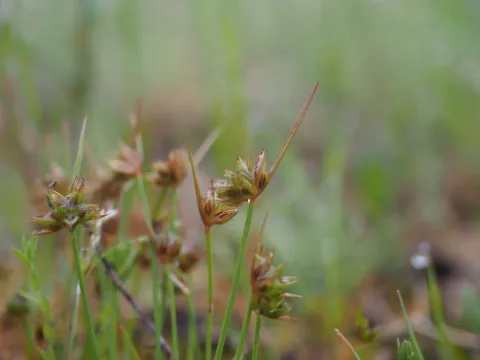
Heath rush
Juncus capitatus
The heath rush (Juncus capitatus) is a small annual herbaceous plant belonging to the Juncaceae family. It is a specialized species that thrives in seasonally damp environments, often colonizing sandy or acidic soils where other plants struggle to establish.
What the section contains
Heath rush
Originally found throughout Europe and the Mediterranean basin, this plant has adapted to survive in ephemeral habitats such as pond edges, damp heaths, and seasonally inundated meadow depressions.
Botanically, the plant is characterized by its compact habit and distinctive capitate inflorescences—dense clusters of flowers that appear at the tops of its slender, wiry stems. Its leaves are typically thin and needle-like, which helps the plant reduce transpiration in its exposed habitats.
Cultivation requires conditions that mimic its natural niche: full sunlight is essential for growth, alongside soil that remains moist throughout the active growing season. While it tolerates wet conditions, it performs best in well-drained acidic sandy substrates that provide sufficient aeration to the roots.
Economically, this species is utilized primarily in ecological restoration projects and specialized ornamental horticulture. It is highly valued in the creation of naturalistic wetland features and bog gardens where soil moisture fluctuates during the year.
The primary threat to the heath rush is the loss of suitable habitat due to land drainage, agricultural intensification, and the permanent alteration of natural hydrological cycles.
The plant demonstrates high resistance to common agricultural pests, as the structural composition of its leaves makes them largely unpalatable to most local insect herbivores.
Fungal diseases are generally rare unless the plant is grown in overcrowded conditions with poor air circulation, which may lead to excessive humidity around the base of the stems.
Invasive species and rapid-growing grasses pose a constant threat by competing for light and soil nutrients, which can quickly overwhelm smaller heath rush populations.
Management efforts should focus on controlling invasive plant species and maintaining the specific soil moisture levels required to ensure the plant remains competitive within the ecosystem.