
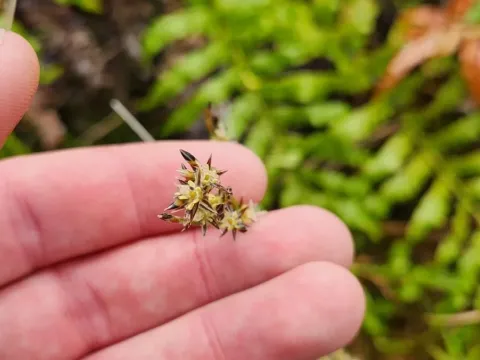
Heath rush
Juncus squarrosus
Heath rush (Juncus squarrosus) is a perennial herbaceous plant belonging to the Juncaceae family. It is a characteristic species of acidic, damp grasslands, heaths, and moorlands across temperate regions.
What the section contains
Heath rush
The native range of this species spans most of Europe and parts of Western Asia. It typically thrives in nutrient-poor environments where water accumulation is frequent throughout the year.
Botanically, it is recognized by its dense basal rosettes of rigid, dark green leaves and stiff, erect stems that often reach heights of 15 to 40 centimeters, terminating in a loose, branched inflorescence.
In terms of environmental requirements, the plant is highly adapted to low pH soils. It demonstrates significant tolerance to waterlogged conditions but avoids areas with high salinity or constant high-intensity drought.
Regarding agricultural utilization, the species is generally considered poor fodder. Its high fiber content and rough texture make it undesirable for livestock grazing, often resulting in it being treated as a weed in pasture management.
The primary threat to heath rush populations is land drainage. As wetlands and heaths are drained for agricultural or urban development, the specific ecological niches required by this plant disappear rapidly.
The plant is naturally resistant to many agricultural pests due to its high silica content, which provides a physical barrier against chewing insects and vertebrate herbivores.
Diseases are infrequent, though under conditions of extreme moisture and poor ventilation, minor fungal leaf spots may occur, limiting the aesthetic and physiological health of the plant.
In agricultural settings, the species acts as a competitor to more nutritious forage grasses, often indicating that the soil requires drainage improvements or lime application to restore productivity.
Effective management strategies focus on habitat modification, such as altering the soil moisture profile, which is more sustainable than applying chemical herbicides that could harm surrounding biodiversity.