
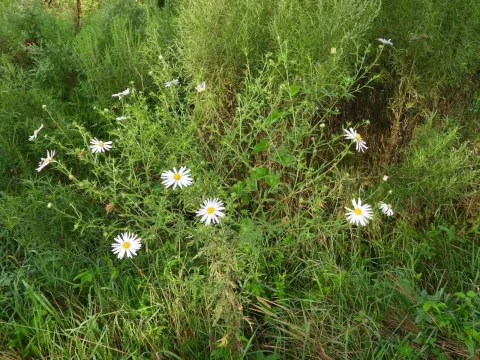
Kalimeris incisa
Kalimeris incisa
Propagation of Kalimeris incisa is most commonly achieved through vegetative methods, specifically by dividing the clump during the spring or early autumn season. Growing from seed requires a period of cold stratification for one to two months to significantly improve germination rates.
What the section contains
Kalimeris incisa
Sowing seeds directly into the open ground is performed either in late autumn or in spring after the danger of frost has passed, often utilizing a nursery tray method. When sowing, seeds should be barely covered with substrate, as they require natural light to trigger successful germination.
The optimal time for planting divisions or seedlings is during the period of active vegetative growth, which allows the root system to adapt efficiently to the new environment before extreme temperatures arrive.
The species demonstrates high survival rates, so with basic irrigation care, young plants quickly develop a robust foliage mass. Planting density should allow for at least 40–50 centimeters between individual plants to ensure adequate air circulation and prevent moisture buildup.
The chosen site should ideally be in a well-lit area, although the plant tolerates light, dappled shade where it retains both its visual appeal and the vibrant, characteristic color of its petals.
Kalimeris incisa belongs to the Asteraceae family and is a low-maintenance herbaceous perennial native to East Asia. Successful cultivation requires well-drained, moderately moist soils with a neutral to slightly acidic pH level.
The culture is highly responsive to the application of organic fertilizers during soil preparation, which stimulates vigorous blooming in late summer and early autumn. A critical factor is the avoidance of waterlogging, as the root system is sensitive to excessive moisture during winter.
The plant exhibits excellent winter hardiness and can withstand significant drops in temperature, making it suitable for cultivation in various temperate climates without the need for specialized winter protection.
Routine care involves regular weeding and loosening of the soil between rows, which effectively suppresses weed growth and improves aeration of the root-inhabiting soil layer.
During prolonged dry spells, Kalimeris requires supplemental irrigation; however, established plants are relatively drought-tolerant due to their well-developed underground rhizomes.
The primary pests affecting Kalimeris include aphids and spider mites, which most frequently attack young shoots under dry atmospheric conditions. These can be effectively controlled using modern, broad-spectrum insecticides.
Among fungal diseases, powdery mildew is the most common, usually appearing when humidity control is neglected and site ventilation is poor. Prevention involves adhering to proper horticultural practices and thinning out overcrowded plantings.
Root rot may occur if the soil is excessively wet or if plants are set in heavy clay soils without adequate drainage. To prevent this, it is essential to monitor watering strictly and improve soil structure before planting.
If initial signs of disease are detected, immediate removal of damaged plant parts is recommended, followed by the application of systemic fungicides. Prompt action helps maintain the aesthetic quality and overall health of the planting bed.
Regular monitoring of leaf condition allows for the early detection of disease hotspots, significantly simplifying the task of protecting the crop from harmful organisms.
The economic and practical use of Kalimeris incisa is primarily focused on ornamental horticulture, landscape architecture, and the creation of durable floral arrangements. The blooming period extends from late July well into the autumn months.
For use as a cut flower, stems are harvested at the semi-opened bud stage, which ensures they remain fresh in vases for a significant duration. Harvesting is best conducted during morning hours when the plant tissues are fully turgid.
In landscape design, the plant is highly valued for forming dense, upright clumps that do not require frequent staking and remain stable even during strong winds. Pruning of spent flower heads is often performed to encourage a second wave of blooms.
Final sanitary pruning of the aerial part is conducted in late autumn, just before the onset of persistent frosts, by leaving short stems roughly 5–10 centimeters in height.
The plant is perfectly suited for mixed borders, the creation of naturalistic meadow-style flower beds, and the decoration of sites with nutrient-poor soils where other flower varieties might fail to establish.