
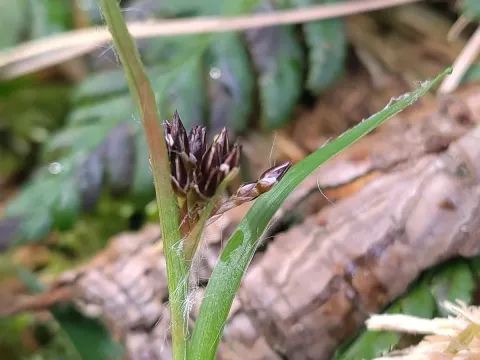
Hairy wood-rush
Luzula pilosa
Hairy wood-rush (Luzula pilosa) is a perennial herbaceous plant belonging to the Juncaceae family. It is native to forests across Europe and parts of Asia, typically found in shaded woodland environments where it thrives in the cool understory.
What the section contains
Hairy wood-rush
The plant is characterized by its narrow, grass-like leaves, which are fringed with distinctive long, white, soft hairs. It grows in small, dense tufts and spreads slowly via short rhizomes, making it an excellent candidate for filling empty spaces in shady garden borders.
Regarding soil requirements, this species prefers moist, acidic to neutral, humus-rich soils. It does not tolerate drought well, so providing a consistent moisture level is essential for its survival and growth throughout the season.
This plant is strictly shade-loving, meaning it requires protection from direct sunlight, which can quickly cause leaf scorch. It is perfectly adapted to environments with cool temperatures and high atmospheric humidity.
In terms of хозяйственное (economic) and ornamental use, Hairy wood-rush is highly valued for its role as a woodland groundcover. It is used in naturalistic garden designs, shaded rockeries, and as a low-maintenance solution for areas under tree canopies.
The primary threats to this plant are fungal pathogens related to root rot, which occur when the soil is kept in a waterlogged state without proper drainage. Overwatering is a significant issue for established clumps.
Slugs and snails are the most frequent pests found in the moist habitats favored by Hairy wood-rush. They feed on the tender young foliage, potentially leaving unsightly holes and reducing the overall aesthetic appeal of the plant.
While relatively hardy, the plant can occasionally suffer from powdery mildew if the air circulation around the tufts is poor or if the plants are situated in a highly stagnant environment.
Prevention involves ensuring well-draining soil and not overcrowding plants, which allows for better airflow. Removing any dead or yellowing foliage in late winter or early spring helps maintain plant hygiene.
Given its natural habitat as a wild forest grass, it is generally resistant to most agricultural pests and diseases when placed in suitable growing conditions that mimic its original woodland ecosystem.