
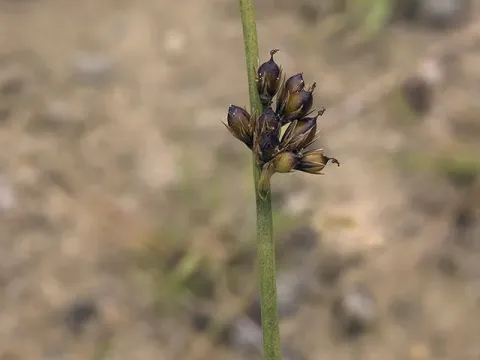
Haenke's rush
Juncus haenkei
The sowing of Haenke's rush seeds is best performed in early spring once soil temperatures reach 15–18°C. Cold stratification of seeds for approximately 3–4 weeks prior to sowing significantly improves germination rates.
What the section contains
Haenke's rush
For indoor propagation, seeds should be surface-sown on a moist, peat-based mix. They are light-dependent germinators and should not be covered with a thick layer of soil, only lightly pressed into the surface.
Vegetative propagation via rhizome division is a highly effective alternative for commercial growers. This method ensures that the genetic characteristics of the parent plant are maintained and results in faster establishment.
When planting seedlings into the field, a spacing of 20–30 cm between plants is recommended. This allows sufficient room for the plant to spread and form the dense clumps characteristic of the species.
Moisture is critical during the seedling stage. The growing medium must never be allowed to dry out completely, as early-stage rush plants are highly sensitive to drought conditions.
Haenke's rush belongs to the Juncaceae family and is well-adapted to hydric environments. It thrives in soils that remain consistently saturated or even periodically submerged under water.
The species prefers full sun to light shade. While it can survive in shaded conditions, its growth habit becomes less compact, and the stems may lose their characteristic stiffness and vibrant green color.
Ideal soil conditions include heavy, organic-rich, and slightly acidic substrates. It is particularly well-suited for clay soils that naturally retain moisture for long periods, common in wetland habitats.
This plant is notably hardy and can withstand low winter temperatures without protection. It is well-adapted to temperate climates, making it a reliable choice for long-term landscaping projects.
While tolerant of various soil pH levels, a range between 5.5 and 7.0 provides the best nutrient availability for sustained growth throughout the summer season.
The main threats to Haenke's rush are fungal pathogens that thrive in stagnant, humid environments. Rust and leaf spot diseases are common if air circulation is insufficient within dense plantings.
Pests are generally not a major concern; however, slugs and snails can occasionally cause localized damage to the base of the stems during periods of high humidity and cool weather.
If the plant is placed in a site that dries out frequently, its natural defenses weaken, making it more susceptible to opportunistic infections and competitive stress from invasive weeds.
Cultural control, such as thinning out old growth and ensuring proper site drainage during the winter, is often more effective than chemical intervention for maintaining plant health.
If chemical application is necessary, one should avoid systemic pesticides that may negatively impact the beneficial microflora associated with the plant’s complex root system.
Harvesting Haenke's rush for floral design or construction purposes is typically conducted in late summer. At this stage, the stems have achieved maximum structural integrity.
Plants are cut near the base, roughly 5–10 cm above the soil line. Using sharp tools is essential to prevent crushing the stems, which can lead to premature decay of the material.
Post-harvest, the stems should be dried in a well-ventilated, shaded area. This slow-drying process prevents color loss and ensures the material retains its flexibility for weaving or decorative applications.
In environmental management, harvesting is a form of nutrient removal. By removing the biomass, growers can help extract excess nitrates and phosphates from aquatic environments.
Consistent annual harvesting promotes vigorous regrowth for the following year. This practice helps prevent the accumulation of dead plant matter, which can otherwise lead to anoxic soil conditions.