
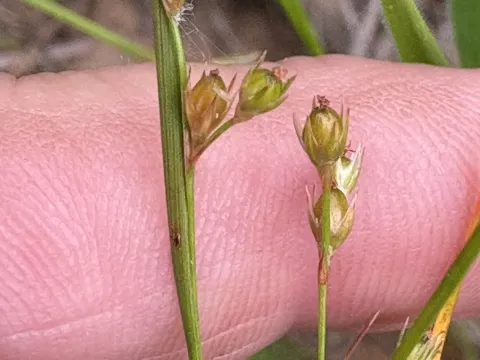
Forked rush
Juncus dichotomus
Forked rush (Juncus dichotomus) is a perennial herbaceous plant belonging to the Juncaceae family. In agriculture, it is not grown as a cash crop but is recognized for its role in phytoremediation and soil stabilization in wet environments.
What the section contains
Forked rush
Native to North America, the plant is found in various climates, particularly in regions with moist, sandy soils. It thrives in open, sunny habitats including wet meadows, streambanks, and along road ditches where moisture levels remain consistently high.
Botanically, it forms dense tufts with narrow, channeled leaves. The stems grow between 30 and 70 centimeters in height, featuring characteristic branched inflorescences that appear forked, which is the primary identifier of the species in the field.
The plant is highly adaptable to soil acidity and moisture fluctuations. It is well-suited for acidic to neutral soils and can withstand both temporary flooding and short periods of drought, making it a robust species for marginal agricultural lands.
Its primary agricultural application is as a cover plant for erosion control. By forming a dense root mat, it prevents soil loss on banks and unstable terrains, contributing to land conservation without requiring significant nutrient inputs or intensive tillage.
Forked rush is susceptible to various fungal pathogens that thrive in high-humidity conditions. Rust diseases are among the most common issues, which can damage the stems and diminish the plant's overall vitality and aesthetic appeal.
Insect pests, particularly larvae feeding on the root system, pose a threat to the plant's stability and survival. Such damage can lead to the thinning of the clumps and create entry points for secondary bacterial or fungal infections.
Effective management against diseases involves maintaining adequate drainage and ensuring airflow between the plant clusters. Reducing moisture buildup in the canopy is the most reliable way to prevent large-scale outbreaks of fungal pathogens in field conditions.
Competition from aggressive weeds or faster-growing grasses can eventually displace the forked rush. Periodic maintenance, such as manual weeding or targeted mechanical cutting, helps the plant maintain its dominance in areas designated for soil stabilization.
Monitoring for signs of decay or localized brown spots in the clusters is recommended for field managers. Early identification of pest or disease outbreaks allows for non-chemical interventions, such as pruning or improving water management, to restore plant health.