
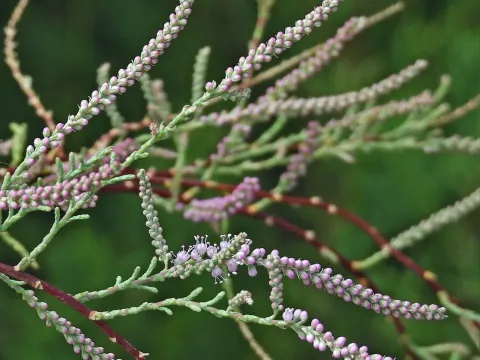
Juniper tamarix
Tamarix juniperina
Juniper tamarix (Tamarix juniperina) is a member of the Tamaricaceae family. It is a deciduous shrub or small tree native to East Asia, known for its feather-like foliage and vibrant pink flowers that bloom in early spring.
What the section contains
Juniper tamarix
This species is highly valued in agriculture and landscaping for its exceptional salt and drought tolerance. It thrives in full sun, which is essential for ensuring robust growth and prolific flowering throughout the season.
Regarding soil requirements, it is undemanding and adapts well to sandy, loamy, or even saline soils. However, good drainage is critical, as the plant does not tolerate waterlogged conditions that can cause root rot.
In terms of climate, it is hardy in many temperate regions but requires protection from severe frost during its juvenile stage. Once established, its deep root system makes it an excellent choice for windbreaks and soil stabilization.
Agricultural management involves regular pruning to maintain an attractive structure. Pruning should be performed after the flowering period to encourage vigorous growth for the next season, preventing the shrub from becoming too straggly.
Juniper tamarix is relatively resistant to pests and diseases, but it can occasionally suffer from fungal leaf spots in humid or stagnant air environments. Maintaining proper spacing between plants is the best preventative measure.
Aphids are the most common pest, often colonizing the succulent new growth during the spring flush. Monitoring the shrub early in the season and applying insecticidal soap is usually sufficient to manage these infestations.
Spider mites may become problematic during periods of prolonged drought and high heat. If damage is observed, applying a miticide or increasing humidity around the plant can help suppress the mite population.
Root rot can occur if the plant is situated in heavy, poorly drained soil for an extended time. Improving the soil texture with organic matter or grit before planting is a fundamental agricultural practice for this species.
Scale insects can occasionally infest the bark of older specimens. Regular inspections of the stems and the use of horticultural oils during the dormant season are recommended to keep the plant healthy and vigorous.