
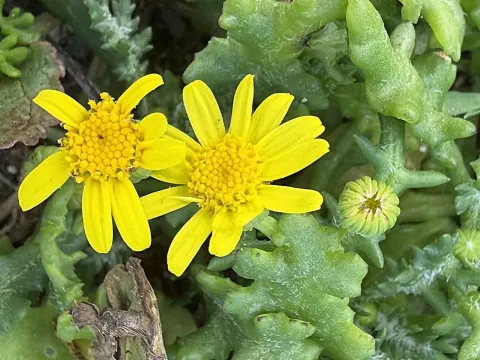
Joppa ragwort
Senecio joppensis
Joppa ragwort (Senecio joppensis) is a herbaceous plant belonging to the Asteraceae family. It is a highly specialized species primarily found in coastal sand dune environments.
What the section contains
Joppa ragwort
The plant exhibits remarkable adaptation to arid conditions and sandy substrates. Its root system is developed to secure the plant in shifting sands while extracting moisture from deeper soil layers.
Sunlight is the primary requirement for its development. As a heliophyte, it thrives in open areas where it is not overshadowed by competing vegetation, ensuring maximum photosynthetic activity.
The soil profile must be well-drained. Heavy or waterlogged soils are detrimental to the species, as they inhibit root respiration and lead to the development of pathological processes in the root zone.
Its resilience to high temperatures makes it a significant component of coastal ecosystems. It has evolved to synchronize its growth cycle with seasonal weather patterns typical of its range.
Pathogenic fungi represent the most significant threat to Joppa ragwort, particularly in conditions where excess humidity prevents the plant from drying out properly.
Pests such as aphids and certain types of beetles can colonize the plant during the early growth stages, causing deformation of the foliage and reducing overall plant vigor.
Environmental threats include the fragmentation of its habitat due to human activity, which reduces the genetic diversity and resilience of localized populations.
Rust diseases can occur, causing necrotic spots on leaves and reducing the photosynthetic surface area during the peak of the growing season.
Competition from invasive species often forces the plant into smaller, more fragmented areas, making it difficult to maintain viable population levels in the long term.