
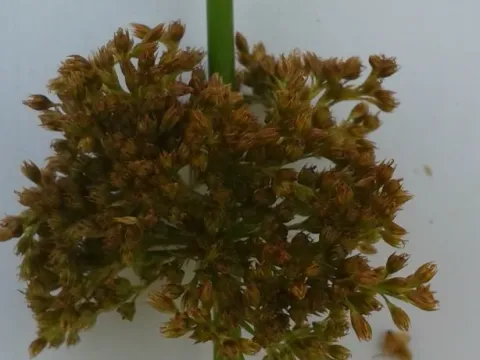
Faurie's rush
Juncus fauriensis
Faurie's rush (Juncus fauriensis) is a perennial herbaceous plant belonging to the Juncaceae family. It is a highly specialized species adapted to wetlands, marshes, and riparian habitats where moisture levels remain consistently high throughout the growing season.
What the section contains
Faurie's rush
Originating from the Far East regions, including Japan, the species has evolved to thrive in temperate climates. It prefers areas with stable water tables and often colonizes marginal zones of freshwater ecosystems where it contributes to natural soil stabilization.
Successful cultivation requires soil that remains constantly saturated or waterlogged. The plant performs exceptionally well in acidic, organic-rich substrates that mimic its native peat-based environments. It has a high tolerance for stagnant water, which would prove detrimental to most traditional crops.
Botanically, it is defined by its robust rhizomatous system and dense, upright stems that create clump-like structures. These adaptations allow the plant to withstand wind and water movement, making it a reliable choice for erosion control projects in aquatic landscapes.
Economically, Juncus fauriensis is primarily used in landscaping and bioengineering. It serves an essential role in phytoremediation, helping to filter nitrogen and phosphorus from water bodies while providing a natural aesthetic characteristic of bog gardens and pond margins.
Faurie's rush is remarkably resistant to many common plant diseases. However, in conditions with insufficient water turnover, fungal infections may affect the stem bases. Proper management of water flow and substrate health is the primary preventative measure.
Insect pests typically avoid Juncus fauriensis due to the high silica content in its tissues, which makes the stems tough and difficult to digest. No major agricultural pests are recorded that would cause economic damage in typical cultivation environments.