
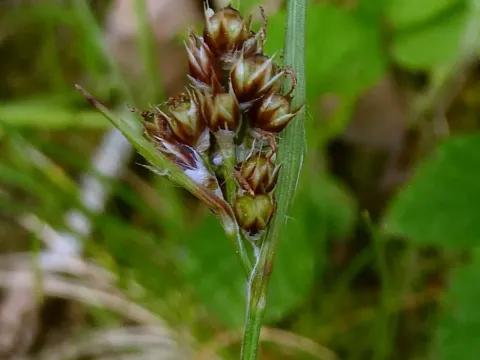
Heath wood-rush
Luzula congesta
Luzula congesta, commonly known as Heath wood-rush, is a perennial herbaceous plant belonging to the Juncaceae family. It is recognized for its ability to form dense clusters, making it an excellent candidate for ground cover and soil stabilization projects.
What the section contains
Heath wood-rush
The plant originates from temperate regions of Eurasia and is typically found in diverse environments, ranging from deciduous woodlands to moisture-rich meadows. Its broad ecological range demonstrates its inherent resilience to varying climate conditions.
Botanically, it is identified by its narrow, grass-like leaves with distinctive white hairs along the margins. The reproductive organs form compact, congested clusters at the top of the stem, which is the primary trait distinguishing it from other species within the genus.
Requirements for successful cultivation include acidic to neutral, moist soil conditions. While the plant can tolerate nutrient-poor substrates, consistent soil moisture is essential, especially during the establishment phase of the root system.
In agricultural and landscaping contexts, it is best utilized for its aesthetic value and functional ability to mitigate soil erosion. Planting in groups facilitates the formation of a sod layer, which protects the soil surface from water and wind-driven degradation.
Luzula congesta is characterized by significant natural resistance to common agricultural pests. Its physical structural integrity and biochemical defense mechanisms make it less attractive to the common insects that frequently infest cereal crops.
The most significant threat to the plant's health is poor drainage, which can lead to fungal issues and root decay. If the soil remains waterlogged for extended periods, the root system loses its ability to intake nutrients, eventually leading to plant decline.
In very damp and shaded areas, there is a risk of developing fungal spots on the foliage. Maintaining an open planting scheme that allows for adequate air circulation is the best management strategy to avoid these infections naturally.
While herbivores and rodents generally avoid the plant, it is important to monitor for mollusk activity in very young plantings. Protecting the early growth phase with appropriate physical barriers can significantly increase the survival rate of the population.
Finally, competition from aggressive weeds should be managed through regular weeding during the first season. Once the plant has established its dense rhizomatous mat, it becomes highly competitive and capable of suppressing most neighboring weeds on its own.