
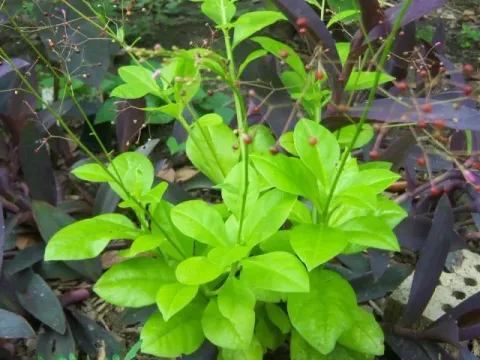
Jewels of Opar
Talinum patens
Jewels of Opar is a tropical perennial that is typically grown as an annual in cooler climates. Seeds should be sown indoors in late February or early March to ensure a robust plant is ready for transplanting once the danger of frost has passed.
What the section contains
Jewels of Opar
Transplanting into the garden should only occur when soil temperatures have reached at least 15-18 degrees Celsius. The plant is highly sensitive to cold, so avoiding early planting is essential to ensure steady and vigorous growth without checking the plant's development.
If sowing directly outdoors, wait until the weather is consistently warm and stable. A planting density of 30 by 40 centimeters is recommended to provide adequate room for the foliage to develop and to ensure sufficient air circulation around the plants.
For germination, seeds require a warm environment of 22-25 degrees Celsius and a good light source. Do not bury the seeds too deeply; surface sowing or very light covering is ideal as light exposure is necessary for successful germination.
Using a lightweight, well-draining seed starting mix is critical for the health of young seedlings. Excessively wet soil during the early stages of growth can lead to damping-off disease, which is the most common cause of seedling loss in this crop.
Jewels of Opar belongs to the Talinaceae family and prefers sunny locations protected from strong, drying winds. While the plant possesses drought-tolerant succulent leaves, regular watering is essential to maintain high-quality edible foliage throughout the growing season.
The plant thrives in loose, fertile soil with a neutral to slightly acidic pH. Heavy clay soils should be amended with organic matter, such as compost or peat, to improve drainage and aeration, preventing the risk of root rot during wet periods.
The optimal temperature range for active growth is between 20 and 30 degrees Celsius. Temperatures below 10 degrees will significantly slow down growth, and prolonged cold exposure can damage the succulent tissue of the leaves and stems.
Feeding the plants with a balanced fertilizer, particularly one with nitrogen, supports the continuous production of fresh green foliage. However, an excess of nitrogen should be avoided as it may compromise the flavor profile and tenderness of the leaves.
Mulching the soil around the plants is an effective agronomic practice that helps retain soil moisture and suppresses competing weeds. Regular cultivation of the soil between rows also aids in oxygen exchange, fostering a more vigorous root system.
The yield of Jewels of Opar depends heavily on the intensity of care and the frequency of harvesting. With proper management and adequate irrigation, a single plant can produce 500 to 800 grams of succulent leaves over the course of the growing season.
The culinary usage is focused on consuming fresh, tender leaves, which are often compared to spinach or purslane in terms of texture and flavor. They are highly nutritious and make an excellent addition to fresh salads and smoothies.
To maximize production, commercial growers often employ drip irrigation systems to ensure consistent moisture levels. This method allows for a harvest cycle every 10-14 days, providing a steady supply of greens throughout the peak summer months.
The quality of the harvest is determined by the state of the leaves, which should be vibrant, succulent, and free from any signs of toughness. Proper timing of the harvest is crucial, as overmature leaves tend to lose their delicate texture and flavor.
Light availability is another factor that impacts total yields. Longer periods of daylight encourage more robust vegetative growth and higher nutrient concentration in the leaves, directly impacting the overall productivity per square meter of cultivation area.
While the plant is generally resilient, aphids can become a significant pest, particularly on young shoots. Regular monitoring and the use of biological control agents are recommended to manage aphid populations without the need for synthetic chemical pesticides.
Excessive moisture in the soil or air can promote fungal issues, such as powdery mildew and root rot. Maintaining proper spacing between plants and ensuring good airflow in greenhouses or garden beds is the best strategy for preventing these conditions.
Nematodes may pose a problem in soil that has not been properly treated or rotated. Integrating cover crops, such as mustard, into the crop rotation cycle prior to planting can help sanitize the soil and reduce the pressure from soil-borne pathogens.
Whiteflies may infest the foliage during hot, dry spells, feeding on the undersides of leaves. The use of yellow sticky traps is an effective way to monitor pest presence, while natural extracts can be used to treat early signs of an infestation.
Slugs and snails can cause significant damage to young seedlings. Physical barriers, such as using wood ash or crushed shells around the base of the plants, help to deter these mollusks and protect the crop during its early development stages.
Harvesting begins when the plants reach a height of 20-25 centimeters, which is typically 40 to 50 days after transplanting. Carefully cut the leaves using clean shears, taking care not to damage the main stem, which encourages the regrowth of side shoots.
The best time for harvesting is early in the morning when the leaves are fully turgid and hydrated. After picking, the foliage should be cooled immediately to maintain its crisp texture and prevent rapid wilting under room temperature conditions.
The shelf life of freshly harvested Jewels of Opar is relatively short, typically 24-48 hours. For best results, keep the harvested greens in a refrigerator at 2-4 degrees Celsius, ideally stored in a perforated bag to maintain optimal humidity.
If seeds are required, select several strong plants and allow them to grow without harvesting. The seed capsules will mature gradually; they should be harvested as soon as they turn dark, preventing the loss of seeds through natural dispersal.
Maintaining sanitary tools throughout the harvest process is mandatory to prevent the transmission of pathogens between plants. Disinfecting shears with an alcohol-based solution between rows is a standard procedure that promotes long-term plant health and productivity.