
Juncus amabilis
Juncus amabilis
Description
Growing requirements
Juncus amabilis belongs to the Juncaceae family, commonly known as the rush family. This perennial herb is naturally adapted to moist, riparian habitats, thriving in locations where water saturation is consistent throughout the growing season.
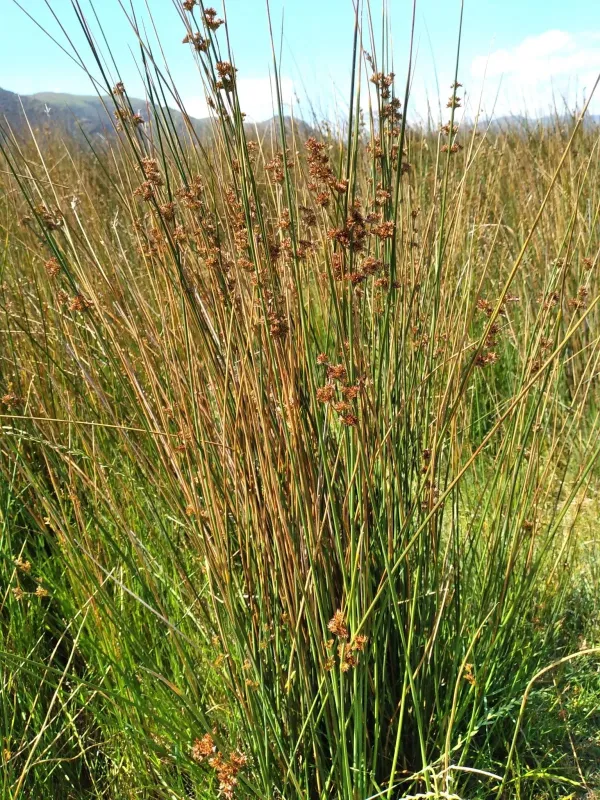
Botanically, this species is characterized by erect, cylindrical stems that are often leafless, relying on the stem for photosynthesis. The root system consists of robust rhizomes that facilitate clonal spread and enable the plant to stabilize wet soils effectively.
Regarding environmental requirements, the species strictly demands high humidity levels. It performs best in hydric soils, such as peat or clay-heavy substrates that have high water-holding capacity, mimicking its native marshy ecosystems.
Temperature plays a vital role in its development. While hardy in various climates, Juncus amabilis prefers temperate to subtropical conditions where long, warm summers allow for maximum biomass production before the winter dormancy period sets in.
Agricultural success depends on light availability. As a heliophyte, it requires full sun to maximize its photosynthetic output. Shading from trees or large shrubs significantly stunts growth and leads to the production of weak, brittle stems unsuitable for industrial use.
Yield
The primary economic value of Juncus amabilis lies in its fiber properties. The stems are remarkably durable, flexible, and resistant to environmental wear, making them an ideal traditional material for weaving mats, baskets, and floor coverings.
Beyond traditional crafts, the plant is increasingly valued for industrial phytoremediation. Its extensive root system absorbs excess nutrients and pollutants from water, making it a critical asset in sustainable wastewater management and water purification projects.
Crop yields are determined by the density of rhizome planting and water management efficiency. In optimal conditions, the plant displays rapid growth rates, allowing for multiple harvests within a single season in warmer climates.
Harvesting techniques typically involve cutting the stems just above the rhizome crown. Timing is essential; for high-quality weaving material, stems are harvested before full maturity to maintain the necessary suppleness and to avoid excessive lignification.
Post-harvest processing involves bundling and drying. To prevent fungal degradation, the drying process must take place in well-ventilated areas, ensuring the moisture content is reduced uniformly to preserve the structural integrity of the fibers.
Main diseases and pests
Juncus amabilis is generally robust, but it is not immune to environmental stressors. The most significant threat to a crop is the imbalance of the water table. Prolonged drying leads to plant stress, whereas stagnant water without circulation encourages bacterial growth.
Fungal pathogens represent the main disease concern, particularly those that target the root base under conditions of poor water quality or excessive temperatures. Symptoms usually include chlorosis and stem softening, which can quickly spread through a dense colony.
Pest pressure is relatively low compared to terrestrial crops, but certain insects specializing in aquatic vegetation can damage the epidermis of the stems. Early detection is key to preventing aesthetic and structural damage to the harvested material.
Soil salinity is a major chemical threat. As a freshwater-dependent species, high levels of dissolved salts in the irrigation water can lead to stunted growth and reduced fiber quality, effectively ruining the crop for commercial sale.
Integrated pest management in Juncus cultivation focuses on biological and physical methods. This includes maintaining steady water flow to prevent the buildup of pathogens and manual removal of compromised stems to maintain the overall health of the plantation.