
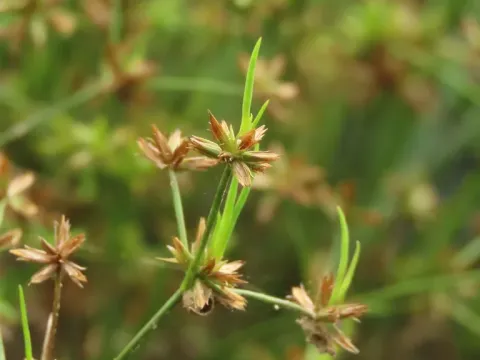
Jointleaf rush
Juncus prismatocarpus
Jointleaf rush (Juncus prismatocarpus) is a perennial herbaceous plant belonging to the Juncaceae family. Naturally, it inhabits wetland areas, marshy lowlands, and the fringes of water bodies. This plant has adapted perfectly to environments where soil moisture levels are consistently high throughout the growing season.
What the section contains
Jointleaf rush
The botanical structure of the plant features slender, leaf-like stems that often display characteristic septate (cross-partitioned) patterns. The inflorescences are dense, head-like clusters that provide the plant with a unique aesthetic and botanical identity. Its root system is fibrous and robust, anchoring the plant firmly in saturated substrates.
Agricultural requirements for this crop focus on water management. The soil must remain saturated or submerged, as the plant lacks drought-tolerance mechanisms. It performs best in nutrient-rich, silty soils that allow for rapid expansion of the root system and biomass accumulation.
Climatic adaptability is highest in tropical and subtropical regions where temperatures remain conducive to growth year-round. In cooler climates, the plant may go dormant or suffer damage if exposed to prolonged freezing, necessitating careful management of the aquatic environment during winter months.
Economic applications for this species are diverse, ranging from its use in phytoremediation for water purification to its role in landscape architecture. It is an excellent candidate for agricultural drainage systems where biological filtration is required to mitigate nutrient runoff.
Jointleaf rush exhibits natural resistance to many common agricultural pathogens due to the high silica content in its foliage, which acts as a physical barrier against many pests. However, overcrowding in stagnant water can lead to localized issues with fungal pathogens.
Pest pressure is relatively low; nevertheless, aquatic insects can occasionally damage stems, which may serve as entry points for secondary infections. Early detection is crucial to maintain the integrity of the harvestable biomass.
Management practices should prioritize the removal of decaying organic matter to prevent the build-up of inoculum. Maintaining a healthy flow or aeration in the water environment is a primary strategy for preventing root-zone diseases.
The use of conventional pesticides is generally discouraged for this species due to its proximity to water. Integrated pest management, focusing on biological controls and cultural practices, is the most effective approach for maintaining healthy crop stands.
Periodic monitoring for discoloration or abnormal growth patterns is recommended for commercial growers. By keeping the site clean and managing density, farmers can ensure optimal yields and high quality for end-use applications.