
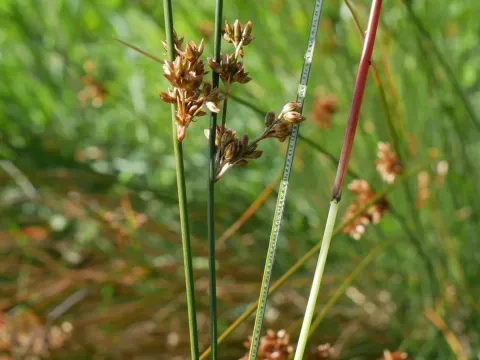
Juncus distegus
Juncus distegus
Juncus distegus is a perennial herb belonging to the Juncaceae family. It is a moisture-loving species that thrives in environments characterized by high soil moisture levels and frequent water inundation.
What the section contains
Juncus distegus
Native to Australia, this plant is naturally distributed in wetland habitats, riparian zones, and waterlogged grasslands. Its role in agriculture is primarily associated with land stabilization and the management of moisture-saturated areas.
The plant requires soils with high water retention capacity, such as heavy loams or silt-based soils. It excels in environments where its root system can remain submerged for extended periods without oxygen deprivation.
Climatic requirements for Juncus distegus involve moderate to warm temperatures combined with consistent precipitation. While it can withstand periods of relative dryness, its biomass quality and growth rate are significantly reduced in arid conditions.
Botanically, this species is defined by its erect, rigid stems and specific inflorescence patterns. The dense root system is highly effective in binding soil, making the plant an excellent candidate for ecological engineering and erosion control projects.
Like many wetland plants, Juncus distegus is susceptible to rust diseases. These fungal infections cause necrotic spots on the stems, which can weaken the plant and reduce its ability to compete with opportunistic invasive species.
Pests such as specialized beetles and larvae that feed on aquatic plant tissue can cause significant damage to the plant's health. Infestations often coincide with periods of environmental stress, such as extreme heat or polluted water runoff.
Competition from aggressive aquatic weeds poses a major threat, especially during the establishment phase. Proper management involves controlling the density of the surrounding vegetation to ensure the plant receives sufficient light.
Inappropriate water management, specifically severe soil drying, creates a hostile environment that invites disease outbreaks and physiological stress, leading to stunted development of the entire cluster.
Preventive strategies for disease management focus on maintaining optimal water levels and preventing the accumulation of dead organic matter around the base of the plant, which minimizes favorable conditions for fungal growth.