
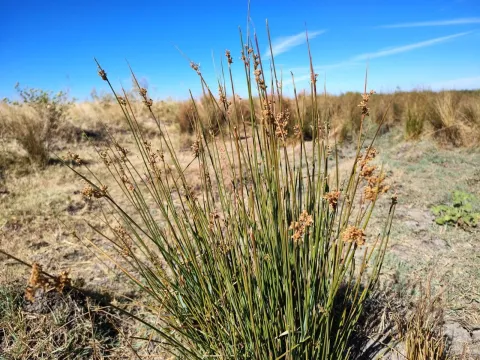
Common rush
Juncus usitatus
The common rush, belonging to the Juncaceae family, is a perennial herbaceous plant with distinct hydrophytic properties. In agricultural practice, sowing or planting of rush seeds is mainly carried out in the spring when the soil warms up to a temperature of 10–12 degrees Celsius.
What the section contains
Common rush
The seeds of the plant are very small, so during sowing, they are not buried deep, but only slightly covered with moist substrate or pressed into the soil surface. The optimal time for sowing in temperate climates is April or early May, which provides seedlings with sufficient moisture during the active germination period.
When cultivating in areas for biofiltration or decorative ponds, both direct seeding and preliminary seedling cultivation in containers are practiced. The seedling method significantly increases the survival rate of young plants in the first weeks after transplantation into open ground.
The expansion of the rush population occurs not only by seed but also through active vegetative propagation via the rhizome system. In industrial-scale ecosystem restoration, planting rhizome cuttings is practiced, which reduces the period for forming a full stand by 1–2 seasons.
Planting density when creating phyto-filters or special technical plantings is usually from 5 to 10 plants per square meter. Such density ensures rapid closure of the stand and suppression of weed growth in the coastal zone.
This crop has specific requirements for growing conditions, preferring permanently waterlogged soils. It thrives on the banks of water bodies, in river floodplains, and in areas with a high water table level.
Optimal soils for the common rush are heavy clay or loamy substrates capable of retaining moisture for a long time. The plant can withstand temporary flooding, making it indispensable when designing areas with variable water regimes.
The common rush is relatively tolerant to soil acidity levels, but it develops most productively on slightly acidic or neutral soils. Good light exposure is a critical factor for biomass accumulation and ensuring intensive photosynthesis.
The plant has high ecological plasticity, withstanding significant temperature fluctuations. In regions with harsh winters, it demonstrates sufficient frost resistance, maintaining the viability of the root system even when the topsoil freezes.
In agronomy, it is important to note that the common rush reacts very negatively to the drying out of the root system. When growing outside natural water bodies, it is necessary to organize a sprinkler or drip irrigation system to maintain constant soil moisture.
The biomass yield of the common rush directly depends on the intensity of nutrition and the water availability of the site. Under natural conditions, biomass accumulates slowly, but with the application of organic fertilizers, yield indicators increase.
Raw material harvesting is carried out at the end of the growing season when the plant reaches its maximum height. For agricultural purposes, it is sometimes used as roughage, although the high stiffness of the stems limits the rush's value as fodder.
The primary use of the harvest is technical. Rush stems are used as raw material for weaving baskets, mats, and other decorative handicraft items that require fiber strength.
The use of common rush in phytoremediation allows for the cleaning of wastewater from excess nitrogen and phosphorus. Yield in this context is measured by the volume of contaminants extracted from the water and accumulated in the plant's tissues.
In industrial plantations, perennial rush stands are capable of providing a stable harvest for 5–7 years without the need for material renewal, which reduces the cost of operating the site.
The common rush has high immunity to most agricultural diseases, which is explained by its specific habitat. Major problems arise when the water balance is disrupted and the site dries out.
Under conditions of water stagnation and poor air circulation, fungal infections such as leaf rust are possible. Prevention involves controlling planting density and ensuring the inflow of fresh water.
Pests that specialize in the common rush are rare. Sometimes different types of aphids or larvae of insects feeding inside the stem may be found, but they rarely cause economically significant damage.
Competition from invasive plant species poses a major threat to young crops. The common rush is sensitive to weed suppression at early stages of development, so weeding in the first year is a mandatory step.
When using rushes in landscape compositions, it is important to ensure that they do not become an aggressive weed that displaces more valuable species. Regular trimming and limiting the rhizome spread zone help control the population.
Harvesting the common rush requires the use of specialized tools, as the stems have high strength and stiffness. Sickles, brush cutters, or specialized mowers for coastal plants are typically used.
The best time for mowing is the period after active flowering ends but before the process of lignification of tissues begins. During this time, the fibers are most elastic, which is important when using stems for weaving.
After collection, the material requires careful drying in the shade to preserve the natural color and strength of the fibers. High humidity during drying can lead to mold development, which completely ruins the marketability of the raw material.
When cleaning wastewater, biomass harvesting should be carried out annually before the onset of winter. This prevents the decay of dead plant parts in the water body and secondary water pollution with nutrients.
The collected material can be used as mulch if it does not contain weed seeds, or processed into compost after pre-shredding, which accelerates the decomposition process of the tough stems.