
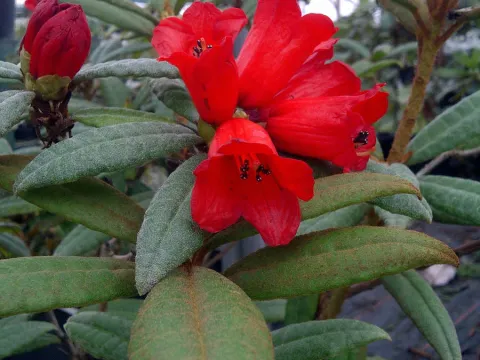
Hunter Rhododendron
Rhododendron venator
The Hunter Rhododendron (Rhododendron venator) belongs to the Ericaceae family. It is an evergreen shrub native to the high-altitude regions of Tibet and Yunnan, adapted to cool, humid, and mountainous conditions.
What the section contains
Hunter Rhododendron
To cultivate this species successfully, one must provide acidic soil with a pH ranging from 4.5 to 5.5. The substrate should be light, rich in organic matter, and feature excellent drainage to prevent root rot, which is a common fatal issue for this plant.
The plant thrives in partial shade, sheltered from direct midday sunlight and harsh winds. In temperate climates, applying a thick layer of mulch around the root zone is essential to maintain moisture levels and preserve soil acidity.
Climate management is crucial for the Hunter Rhododendron. It requires protection during severe winters, especially when young. Watering should be done with soft or acidified water, as lime-rich water can rapidly induce leaf chlorosis.
In terms of agricultural and horticultural use, this plant is primarily valued for its intense red to orange-red flowers. It serves as an aesthetic feature in specialized Ericaceous gardens, rockeries, and woodland landscape designs.
Phytophthora root rot is a major threat to this species, usually caused by waterlogged soil conditions. Proper irrigation management and fungicides are required to mitigate this risk.
Rhododendron lace bugs are common pests that feed on the undersides of leaves, causing them to appear stippled or yellow. Regular inspections and systemic insecticides are the standard control methods.
Powdery mildew can infect the foliage in conditions of poor air circulation and high humidity. Ensuring proper spacing between plants helps to reduce the incidence of this fungal issue.
Spider mites are a nuisance in hot, dry summers. Maintaining high humidity and using appropriate miticides can keep the population under control and protect the leaves.
Chlorosis is a frequent physiological problem linked to iron deficiency or high soil pH. Gardeners must regularly monitor soil acidity and apply iron chelate supplements to keep foliage vibrant and healthy.