
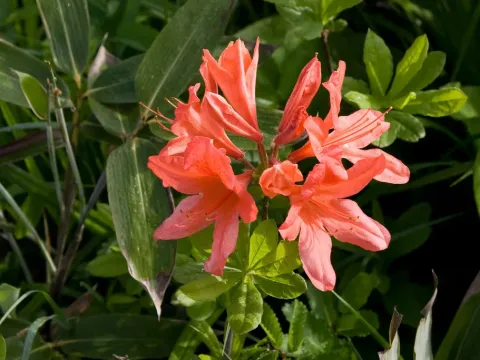
Japanese azalea
Rhododendron japonicum
Japanese azalea (Rhododendron japonicum) is a stunning deciduous shrub belonging to the Ericaceae family, widely recognized for its vibrant floral displays. Native to the mountainous regions of Japan, this species is adapted to cool, moist environments and dappled forest light.
What the section contains
Japanese azalea
The cultural success of this plant depends entirely on soil acidity, which must remain between 4.5 and 5.5 pH. Gardeners must ensure the planting site contains a high proportion of organic matter, such as acidic peat moss or well-decomposed pine needles, to create a loose and well-draining structure.
This shrub thrives in partial shade, where it is shielded from the harsh afternoon sun. Intense exposure can scorch the leaves and dehydrate the delicate root system, which typically resides near the surface of the soil, making mulching an essential maintenance practice.
Adequate hydration is critical for the survival of the plant, especially during the dry summer months. Irrigation should be performed using soft water, as tap water containing high levels of calcium or chlorine can gradually alter the soil pH, causing irreversible damage to the roots.
Fertilization should be limited to the growing season and performed using specialized acid-loving plant fertilizers. Excessive nitrogen or the presence of lime in standard garden fertilizers can cause severe nutrient lockout and reduce the plant's ability to produce flowers for the following season.
Common pests include spider mites, which thrive in hot and dry conditions and can quickly cause discoloration of the foliage. Infestations are best managed through increased humidity, regular misting, and the application of appropriate miticides when necessary.
Fungal diseases like powdery mildew and Botrytis blight are frequent issues when air circulation is poor or humidity levels remain high for extended periods. Pruning to improve airflow and avoiding overhead irrigation can significantly reduce the risk of these infections.
Chlorosis is a frequent diagnostic issue, characterized by the yellowing of leaves between the veins due to iron deficiency. This typically results from a rise in soil pH, requiring immediate corrective measures such as the addition of sulfur or iron chelates to the substrate.
Root rot is a major threat, usually caused by stagnant water in poorly drained soil. Early signs include wilting of the foliage despite adequate surface watering, which indicates that the root cortex has already succumbed to pathogen damage.
Integrated pest management, involving proper site selection and healthy soil maintenance, is the most effective way to prevent these issues. Keeping the garden free of plant debris and monitoring the foliage regularly ensures early detection of any physiological or pathological stressors.