
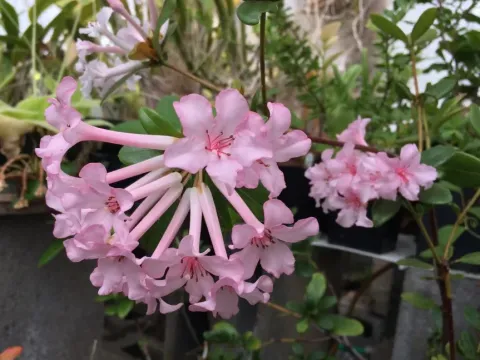
Jasmin-flowered rhododendron
Rhododendron jasminiflorum
The Jasmin-flowered rhododendron (Rhododendron jasminiflorum) belongs to the Ericaceae family. It is a distinctive tropical evergreen shrub, native to the Malayan Peninsula and Sumatra, often growing as an epiphyte in its natural habitat.
What the section contains
Jasmin-flowered rhododendron
This species is highly valued for its fragrant, white to pinkish tubular flowers. Due to its tropical origins, it requires a controlled indoor or greenhouse environment, as it cannot withstand frost or significant temperature drops.
Cultivation success heavily depends on the planting medium. A highly acidic, porous, and well-draining substrate is required, typically consisting of peat moss, pine bark, perlite, and charcoal to replicate an epiphytic growing environment.
Humidity management is crucial for the health of this species. Maintaining a constant humidity level of 70% to 80% is essential for both foliage vigor and proper flower development, preventing bud drop during the bloom cycle.
Light levels should be bright but diffused; direct midday sun can scorch the foliage. Consistent irrigation with soft, lime-free water is necessary, as the plant is sensitive to calcium and mineral salt accumulation in the root zone.
Common pests affecting R. jasminiflorum include spider mites, mealybugs, and scale insects. These pests thrive in poorly ventilated indoor environments with low humidity levels.
Root rot is the most common physiological disorder, usually caused by overwatering or the use of heavy, non-aerated potting mixes that suffocate the delicate root system.
Fungal pathogens such as Phytophthora can lead to wilting and crown decay. Prevention includes ensuring proper drainage and avoiding direct contact between the leaves and standing water.
Regular sanitation of the growing area and prompt isolation of any affected plant are vital to prevent the spread of both insects and fungal spores throughout the collection.
Effective pest management relies on early detection via frequent plant inspections and the use of targeted acaricides or systemic insecticides when necessary.