
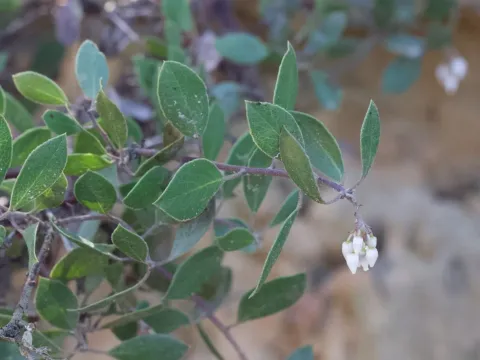
Hooker's manzanita
Arctostaphylos hookeri
Hooker's manzanita (Arctostaphylos hookeri) is an evergreen, ground-hugging shrub belonging to the Ericaceae family. Native to the coastal regions of California, this plant is well-adapted to rocky and sandy soil conditions.
What the section contains
Hooker's manzanita
For successful cultivation, the plant requires excellent drainage. It is highly intolerant of waterlogged soil, which typically leads to root decay. Sandy, acidic, or neutral soils are considered optimal for its healthy growth.
Environmental requirements include a location with plenty of sunlight. While it can handle partial shade, the plant performs best in full sun. It is highly drought-tolerant, making it an excellent choice for xeriscaping.
The botanical features include small, leathery leaves and delicate clusters of white to pink flowers. These characteristics make it a standout choice for gardeners looking for low-maintenance evergreen ground cover.
In terms of agricultural and horticultural use, Hooker's manzanita is widely valued for slope stabilization and decorative border planting. It provides year-round foliage with minimal water inputs.
Root rot represents the primary agricultural threat to Hooker's manzanita. This condition is triggered by excessive irrigation or poor soil structure, which prevents proper oxygenation of the roots.
Common pests include aphids and scale insects that can infest the foliage, particularly in early spring. Regular monitoring is recommended to keep pest populations at manageable levels without heavy chemical intervention.
Leaf spot infections may occur in areas with high humidity or poor airflow. Ensuring that plants are spaced adequately helps to mitigate the risk of fungal spread across the planting area.
Management practices prioritize prevention over chemical treatment. Proper site selection, avoiding over-watering, and ensuring adequate spacing between individual plants are crucial for long-term health.
Sanitary pruning of dead branches should be performed when necessary to maintain the plant's aesthetic appeal and health. This simple practice prevents the accumulation of diseased material within the shrub canopy.