
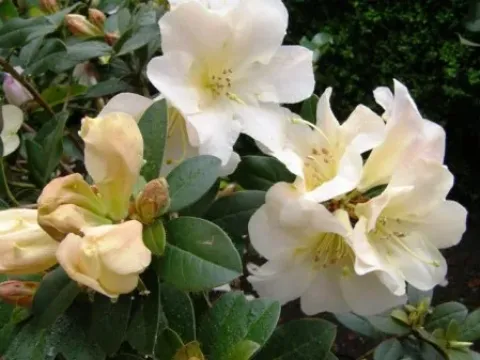
Johnstone's rhododendron
Rhododendron johnstoneanum
Johnstone's rhododendron (Rhododendron johnstoneanum) is an attractive evergreen shrub belonging to the Ericaceae family. It is native to the mountainous regions of Northeast India and Myanmar, where it grows in cool, moist forest environments.
What the section contains
Johnstone's rhododendron
This shrub typically grows to a height of 2 to 3 meters. Its foliage is characterized by leathery, dark green leaves that feature fine hairs on the underside, a trait common to many alpine species of this genus.
The plant is highly prized for its fragrant flowers, which appear in creamy white or pale yellow shades. The inflorescences consist of several trumpet-shaped blooms that provide a strong, pleasant scent during the flowering season.
Cultivation success depends on providing acidic, well-draining soil rich in organic matter. Rhododendrons thrive in sites that offer partial shade, avoiding direct exposure to harsh afternoon sun, which can dehydrate the leaves.
Proper maintenance involves mulching with pine needles or bark to keep the root zone cool and acidic. Regular watering with soft water is essential, especially during dry spells, while ensuring that the roots do not become waterlogged.
Like many species in the genus, this rhododendron is susceptible to fungal diseases such as Phytophthora root rot, which is often triggered by poor soil aeration and excessive moisture levels.
Pests that commonly affect the plant include spider mites and lace bugs. These insects feed on the foliage, leading to yellowing or speckled leaves and a general decline in the plant's aesthetic appeal.
Integrated pest management, including regular inspection and the application of horticultural soaps or specific insecticides, is recommended to manage infestations at an early stage.
Chlorosis, indicated by yellowing leaves with green veins, often signifies that the soil pH has risen too high. Corrective measures, such as applying elemental sulfur or specialized acid-loving fertilizers, are required.
Sanitation practices, such as removing fallen leaves and pruning dead branches, help to minimize the buildup of pathogens in the immediate environment surrounding the shrub.