
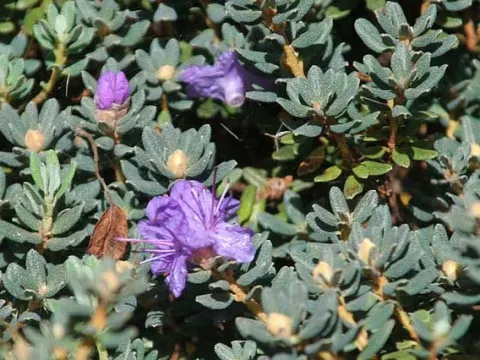
Impeditum rhododendron
Rhododendron impeditum
The Rhododendron impeditum, commonly known as the Impeditum rhododendron, is a small-scale, evergreen shrub belonging to the Ericaceae family. Originating from the mountainous regions of southwestern China, it is prized for its dense, cushion-like growth habit.
What the section contains
Impeditum rhododendron
This botanical species is characterized by its miniature leaves, which are typically aromatic when crushed, and its profuse display of funnel-shaped flowers ranging from violet-blue to lavender. The plant maintains a slow growth rate, making it an ideal choice for rock gardens and borders.
Successful cultivation requires acidic, well-draining soil with a pH ranging from 4.5 to 5.5. It thrives in sites with organic-rich substrates, such as peat moss or pine bark compost, which mimic its natural alpine habitat and prevent root rot.
The plant demands a sheltered location with partial shade, avoiding harsh afternoon sun that can scorch its delicate foliage. It shows significant cold tolerance, though it benefits from a layer of mulch to stabilize soil temperatures during winter months.
Watering management is crucial for the health of Rhododendron impeditum; it requires consistent moisture but cannot tolerate waterlogged conditions. Using soft or rainwater is highly recommended, as hard tap water can gradually increase soil alkalinity and lead to nutrient deficiencies.
Phytophthora root rot is the most destructive disease affecting this species, usually caused by poor drainage. Preventing this involves ensuring a high level of substrate aeration and avoiding the practice of over-watering the root zone.
The rhododendron bug is a common pest that feeds on the undersides of leaves, causing a stippled, mottled appearance on the upper surface. Integrated pest management, including horticultural oils or systemic insecticides, can effectively control these populations.
Powdery mildew may occur if air circulation is inadequate, especially in humid and stagnant environmental conditions. Pruning and spacing are essential practices to ensure that the foliage remains dry and adequately ventilated during the growing season.
Vine weevils are a hidden threat, as their larvae feed on the roots, causing the shrub to wilt suddenly. Regular monitoring of the foliage for notched edges, which indicate adult beetle activity, can help in early detection and treatment.
Nutrient deficiency, specifically iron chlorosis, often manifests as yellowing of the leaves while the veins remain green. This is primarily a result of soil pH being too high, which prevents the plant from absorbing necessary micronutrients from the growing medium.