
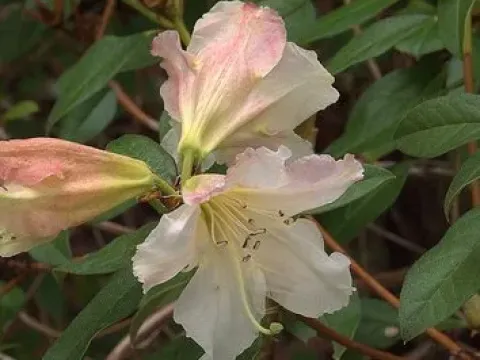
Hooker's rhododendron
Rhododendron hookeri
Hooker's rhododendron (Rhododendron hookeri) is a magnificent evergreen shrub belonging to the Ericaceae family, native to the high-altitude forests of the Eastern Himalayas. It is highly valued in horticulture for its dense, leathery foliage and vibrant, bell-shaped crimson flowers that bloom in early spring.
What the section contains
Hooker's rhododendron
The plant requires acidic, well-draining soil with a pH ranging from 4.5 to 5.5. A mixture of peat moss, pine bark, and coarse sand is ideal to mimic its natural environment. Ensuring the substrate remains porous is crucial, as the root system is extremely sensitive to waterlogging and soil compaction.
Climate requirements for this species include high atmospheric humidity and moderate temperatures. It thrives in sheltered locations with partial shade, as intense direct sunlight can scorch the leaves and significantly stress the plant, leading to poor growth and reduced flowering capacity.
Regular mulching is an essential horticultural practice for this species. Applying a layer of pine needles or wood chips around the base helps retain soil moisture, stabilizes temperature, and prevents weeds from competing with the shallow roots of the rhododendron.
In landscaping, it serves as an excellent feature plant for woodland gardens, acid-loving plant collections, or shaded border placements. Its architectural beauty and seasonal color bursts make it a premium choice for gardeners focused on creating biodiversity-rich and aesthetically pleasing landscapes.
The most common pathological threats include Phytophthora root rot, often caused by poor drainage, and various leaf spot fungal diseases. Prevention involves improving soil aeration, maintaining correct irrigation levels, and ensuring that the foliage stays relatively dry to prevent fungal spore germination.
Typical insect pests include rhododendron bugs, spider mites, and vine weevils. Spider mites thrive in dry conditions and can cause severe leaf discoloration, while vine weevil larvae can destroy root systems, making it necessary to implement integrated pest management strategies including appropriate insecticides.