
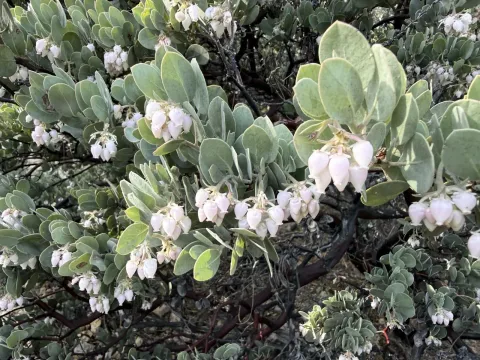
Hoary manzanita
Arctostaphylos canescens
Hoary manzanita (Arctostaphylos canescens) is an evergreen shrub belonging to the Ericaceae family, widely recognized for its distinctive grayish foliage and rugged ornamental appearance.
What the section contains
Hoary manzanita
Native to the western regions of North America, particularly California and Oregon, this species is well-adapted to Mediterranean climates characterized by long, dry summers and mild, wet winters.
The cultivation of this plant requires extremely well-draining soil. It thrives in sandy or rocky substrates where water cannot accumulate near the root zone, as the species is highly susceptible to root rot.
Full sun exposure is essential for the healthy growth of Hoary manzanita. Insufficient sunlight often leads to sparse foliage and a loss of the compact habit that makes the plant desirable for landscaping.
Soil chemistry is critical, as the plant demands an acidic environment. Amending the soil with peat or pine bark is often necessary to maintain the proper pH levels required for optimal nutrient uptake.
Root rot is the primary threat to the longevity of the plant, often triggered by over-irrigation or poorly drained soil conditions that keep the root system consistently wet.
Fungal leaf spot diseases can affect the shrub during periods of high humidity. Keeping the foliage dry and ensuring adequate spacing between plants can significantly reduce the risk of outbreaks.
Pests such as scale insects and spider mites may occasionally infest the plants. These pests often target stressed specimens, making proper water management an important preventative measure.
Pruning should be performed with caution to avoid leaving large wounds that can serve as entry points for pathogens. Clean, sharp tools are mandatory to prevent the transmission of diseases.
Integrated pest management, including regular monitoring and the use of targeted applications when pests are detected, is the most effective way to manage the health of this slow-growing shrub.