
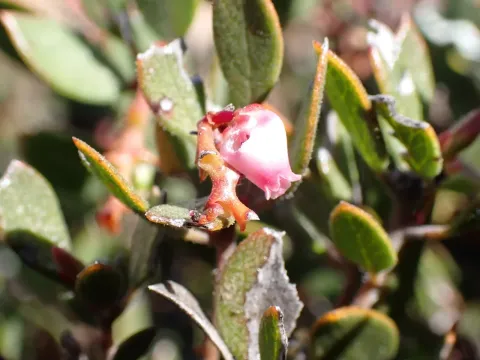
Ione manzanita
Arctostaphylos myrtifolia
Arctostaphylos myrtifolia, commonly known as Ione manzanita, is a member of the Ericaceae family. It is a rare evergreen shrub endemic to specific serpentine soil habitats in California, representing a specialized botanical niche.
What the section contains
Ione manzanita
The plant features small, leathery leaves and a dense growth habit, adapted to nutrient-poor substrates. Its biological strategy focuses on resource conservation and slow growth, making it highly resilient to harsh environmental conditions.
Climatic requirements involve dry summers and mild winters with high light exposure. The soil must be exceptionally well-drained, as the species is intolerant to standing water and high moisture levels which facilitate root rot pathogens.
Agronomic management is minimal, requiring a substrate that mimics its native serpentine environment. Fertilization should be avoided to prevent rapid, weak growth; the species thrives in soils with low nitrogen and high magnesium levels.
Its primary use is in restoration ecology and native plant landscaping. Due to its conservation status, sourcing plants for agricultural or ornamental purposes should only be done through authorized native plant nurseries.
The most significant threats to Arctostaphylos myrtifolia are water-borne pathogens, specifically Phytophthora species. Excessive irrigation is the primary factor leading to root decay and subsequent mortality.
Pests such as aphids and scale insects can weaken young plants. Integrated pest management using insecticidal soaps or horticultural oils is recommended if infestation levels exceed acceptable thresholds.
Fungal infections of the foliage can occur if there is insufficient airflow around the canopy. Pruning to maintain a healthy structure and spacing plants appropriately helps mitigate these humidity-related issues.
Soil pH imbalances can significantly stress the plant. Keeping the soil in the optimal range is crucial, as any drift towards alkalinity can impair the uptake of essential micronutrients, leading to yellowing leaves.
Invasive weeds pose a constant threat by competing for moisture and sunlight. Using inorganic mulch like gravel is highly recommended to protect the root zone and prevent weeds from establishing near the plant base.