
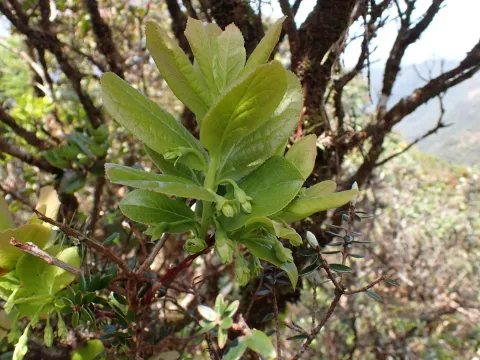
Vaccinium calycinum
Vaccinium calycinum
Vaccinium calycinum belongs to the Ericaceae family and is a native evergreen or semi-evergreen shrub. It is endemic to the Hawaiian Islands, thriving in high-altitude environments often associated with misty, volcanic regions.
What the section contains
Vaccinium calycinum
The plant requires acidic, well-drained soils rich in organic matter. In its natural habitat, it is typically found in volcanic or peaty substrates that offer both the required acidity and moisture retention capacity.
Climatic preferences include stable, cool temperatures without extreme fluctuations. The species is adapted to mountain conditions and requires high humidity to maintain turgor in its thick, leathery leaves.
Botanical traits include a symbiotic root relationship with mycorrhizal fungi, which is essential for nutrient uptake. Without this biological partnership, the plant struggles to develop in poor soil conditions.
Cultivation requires careful site selection where partial shade can be provided. Avoiding waterlogged soil is critical, as root respiration is sensitive to anaerobic conditions often caused by poor drainage.
The agricultural use of Vaccinium calycinum is currently limited to sustainable foraging and small-scale experimental planting. The berries are valued for their taste and potential health benefits.
Yield potential depends heavily on environmental conditions, including light intensity and soil moisture. In the wild, plants show variable productivity, with some individuals producing more fruit under optimal canopy gaps.
Nutritionally, the berries are rich in compounds characteristic of the Vaccinium genus, including anthocyanins. These nutrients are increasingly studied for their potential use in niche nutraceutical markets.
Harvesting should be performed manually to ensure the longevity of the plant, as the branches are somewhat delicate. Over-harvesting can weaken the bush and reduce the yields for the following growing season.
Future development of this culture suggests that breeding selected varieties could stabilize yields and improve fruit size for commercial gardening enthusiasts interested in native flora.
Invasive species pose the most significant threat to wild populations of Vaccinium calycinum. Competition for resources from non-native plants can severely limit the growth and expansion of native stands.
Fungal diseases, especially those affecting the root system, are common in humid environments with poor air circulation. Proper spacing and airflow management are essential preventive strategies.
Pests such as aphids and spider mites can attack new vegetative growth. Monitoring these populations during the growing season is necessary to prevent significant plant damage or loss of vigor.
Climate instability, particularly rising temperatures at higher elevations, threatens the survival of this species. Heat stress during flowering can lead to poor fruit set and reduced overall plant health.
Habitat destruction due to human land use and climate-driven ecosystem changes requires active conservation efforts to protect the remaining populations and ensure the survival of this unique berry.