
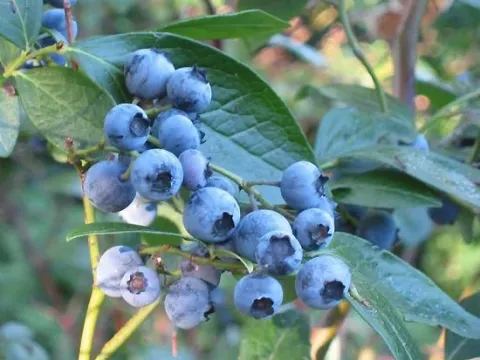
Vaccinium caesariense
Vaccinium caesariense
Vaccinium caesariense, commonly known as a type of New Jersey blueberry, is a deciduous shrub belonging to the Ericaceae family. Native to the damp, acidic habitats of the Atlantic coastal plain of North America, it is a specialized crop requiring specific environmental conditions.
What the section contains
Vaccinium caesariense
Botanically, the shrub is characterized by its small, elliptic leaves and clusters of bell-shaped flowers that develop into dark blue berries. It thrives in open, boggy areas, making it a unique candidate for specific agricultural climates that mimic these natural surroundings.
The primary cultivation requirement is a highly acidic soil, with a target pH between 4.0 and 5.0. Without appropriate soil acidification, the plants exhibit iron chlorosis and fail to establish a healthy root system, eventually leading to stunted growth or death.
Hydration is critical; the crop needs consistent moisture without waterlogging. Irrigation systems must be designed to maintain uniform soil moisture, especially during the fruit-set phase, to ensure optimal berry size and quality in a commercial setting.
Site selection should prioritize areas with good air circulation to mitigate the risk of fungal outbreaks. While the plant can tolerate partial shade, full exposure to morning sunlight is preferred to enhance the accumulation of sugars within the berries throughout the maturation period.
The health of Vaccinium caesariense plantations is frequently challenged by fungal pathogens such as Botrytis blight and Phytophthora root rot. These diseases thrive in environments where drainage is poor and humidity levels are uncontrolled for long periods.
Insect pests including blueberry gall midges and various leafrollers can cause significant damage to foliage and developing buds. Integrated pest management strategies, such as monitoring traps and biological control agents, are highly recommended to protect yield.
Weed control is an essential aspect of pest management, as encroaching weeds compete for nutrients and create microclimates that harbor insects. Manual weeding or the use of specific, non-toxic mulch layers is preferred over broad-spectrum herbicides.
Animal intrusion, particularly from birds, requires physical barriers like netting to ensure the crop reaches harvest maturity. Providing deterrents early in the ripening phase is vital to preventing substantial losses in harvest quantity and quality.
Long-term soil health management involving periodic testing for nutrient imbalances is crucial. Ensuring a stable population of symbiotic mycorrhizal fungi is necessary for the plant's ability to uptake phosphorus and other essential microelements in nutrient-poor acidic soils.