
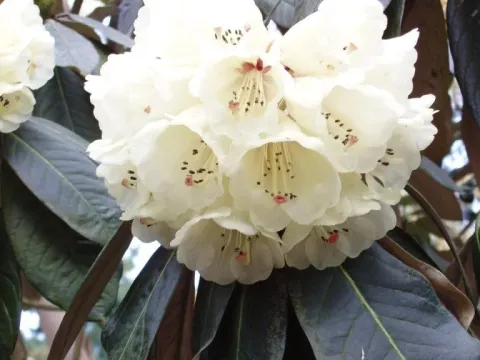
Rhododendron praestans
Rhododendron praestans
Rhododendron praestans is a majestic evergreen shrub or small tree belonging to the Ericaceae family. Native to the high-altitude regions of Southeastern Tibet and China, this species is highly valued for its imposing stature and large, attractive leaves that showcase its botanical uniqueness.
What the section contains
Rhododendron praestans
The plant is characterized by its significant height, often reaching several meters in its natural habitat. Its foliage is notably large, elliptical, and features a distinct tomentose or felt-like indumentum on the underside, which serves as a protective mechanism against harsh environmental conditions.
For successful agricultural cultivation, the plant requires well-draining, acidic soil rich in organic matter. Gardeners should ensure a pH level between 4.5 and 5.5. A mixture of peat moss, pine bark, and perlite is often recommended to create an environment that promotes healthy root aeration.
Climate adaptation is a critical factor for Rhododendron praestans. It thrives in cool, humid climates and struggles in regions with hot, arid summers. Providing shade from intense afternoon sun and protection from strong winds is essential to prevent leaf desiccation and promote vigorous growth.
Agronomic management includes maintaining consistent soil moisture, though waterlogging must be avoided to prevent root diseases. Mulching with organic material is a standard practice to regulate root temperature and preserve soil acidity, ensuring the long-term health of the shrub.
The most common biological threats include fungal infections such as Phytophthora root rot and Botrytis blight. These often occur when environmental conditions, such as high humidity without adequate airflow, create a breeding ground for pathogens near the plant's base.
Pest pressures primarily include rhododendron bugs and spider mites that thrive in dry air conditions. Regular monitoring of the foliage and implementing integrated pest management strategies, including the use of horticultural oils or specialized insecticides, are recommended to maintain plant vitality.