
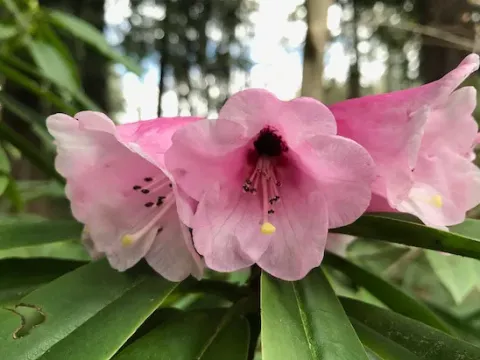
Rhododendron pachytrichum
Rhododendron pachytrichum
Rhododendron pachytrichum is an ornamental evergreen shrub belonging to the Ericaceae family. Native to the mountainous regions of Sichuan, China, this species is highly valued for its striking, hair-covered young shoots and leaves, which provide a unique texture compared to other members of the genus.
What the section contains
Rhododendron pachytrichum
The plant typically grows as a large shrub, potentially reaching heights of several meters in its native habitat. Its botanical structure is defined by its slow, steady growth rate and dense branching, making it an excellent candidate for shaded woodland garden settings and specialized landscape designs.
Regarding soil requirements, this species necessitates highly acidic, well-draining substrates rich in organic matter. A mixture of peat moss, pine bark, and coarse sand is ideal to replicate the forest soil conditions, while heavy or waterlogged soils must be avoided to prevent root damage.
Climate preferences for Rhododendron pachytrichum focus on cool, humid environments with protection from strong winds and direct sunlight. In cultivation, it thrives best in partial shade, where the ambient humidity is consistent and the risk of heat stress on the foliage is significantly reduced.
Agricultural management relies heavily on moisture control and surface mulching. Maintaining a layer of coniferous mulch around the root zone helps stabilize soil temperature and acidity levels. Since the root system is shallow and sensitive, fertilization must be done with specific acid-loving plant formulas.
Common fungal diseases include Phytophthora root rot and leaf spot, which often result from poor site drainage or excessive moisture. To mitigate these threats, gardeners should ensure proper spacing for airflow and implement preventative fungicide sprays during periods of high humidity and rainfall.
Pests such as rhododendron bugs and spider mites are the primary threats to foliage health. These pests can cause significant leaf discoloration and wilting. Integrated pest management, including regular inspection and targeted application of horticultural oils or insecticides, is necessary to maintain plant vigor.