
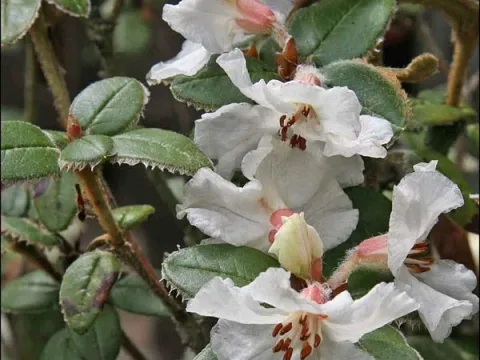
Rhododendron pendulum
Rhododendron pendulum
Rhododendron pendulum is a compact, evergreen shrub belonging to the Ericaceae family. Known for its distinct morphological features, this species is frequently found growing as an epiphyte or lithophyte in the high-altitude regions of the Himalayas, specifically in Tibet and Yunnan.
What the section contains
Rhododendron pendulum
For successful cultivation, it is essential to replicate its natural mountain habitat. The species thrives in cool environments with consistently high atmospheric humidity, which is often challenging to maintain in lowland greenhouse or garden settings.
The substrate must be highly acidic, with a pH range of 4.5 to 5.5, and exceptionally well-draining. A mix consisting of orchid bark, peat moss, and perlite is often used by professional growers to ensure the roots receive adequate oxygen while retaining necessary moisture.
Climate management involves providing bright, indirect light and avoiding extreme summer heat. The plant is sensitive to temperature fluctuations and benefits from a stable, cool environment throughout the growing season to prevent foliage drop and stunted growth.
In terms of agricultural and horticultural utility, Rhododendron pendulum is primarily a botanical interest plant. It is widely collected by enthusiasts for alpine gardens and rockeries where its unique, felted, and leathery foliage adds aesthetic value to cool-temperate garden designs.
Like many species in the genus, this rhododendron is highly susceptible to root-borne diseases such as Phytophthora. These conditions are typically exacerbated by poorly draining soils or excessive irrigation, which suffocate the delicate root system.
Pest management is focused on common greenhouse and garden enemies, including spider mites and leafhoppers. These insects tend to thrive in dry conditions; therefore, maintaining proper ambient humidity is both a cultural requirement and a preventative measure against pest outbreaks.