
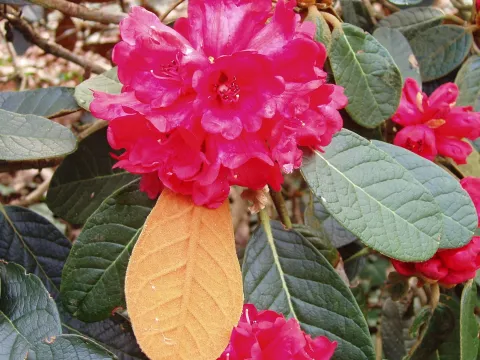
Blood-red rhododendron
Rhododendron haematodes
The blood-red rhododendron (Rhododendron haematodes) is a perennial evergreen shrub belonging to the Ericaceae family. It is native to the mountainous regions of Yunnan, China, where it thrives in alpine environments at high elevations.
What the section contains
Blood-red rhododendron
This shrub is characterized by its slow growth habit, typically reaching heights of up to 1.5 meters. The leaves are distinctive, featuring a leathery texture and a dense, woolly, brownish indumentum on the underside, which aids in water retention.
For optimal growth, this species requires a cool, humid climate with protection from harsh midday sun. It is strictly adapted to acidic, well-draining soils rich in organic matter, such as peat or leaf mold, and cannot survive in alkaline or clay-heavy environments.
Cultural practices include ensuring consistent soil moisture without waterlogging. It is highly recommended to plant it in sheltered, semi-shaded areas, as extreme wind and heat can stress the root system, which is shallow and sensitive to disturbances.
Horticulturally, it is prized for its intense, vivid red, bell-shaped flowers. It is primarily used in specialized rock gardens or as a specimen plant, adding significant color and texture to landscape designs.
The most common threats to the health of this species are root rot and Phytophthora, often triggered by poor soil aeration and excessive irrigation. Ensuring a high-quality drainage layer is a critical preventive step.
Chlorosis is a frequent physiological disorder observed when the soil pH rises above the optimal range. This leads to yellowing foliage, which severely weakens the plant's overall vigor and flowering potential.
Insect pests such as rhododendron bugs, aphids, and spider mites can cause significant damage. These pests frequently target the underside of leaves, leading to mottling and loss of leaf tissue.
Effective pest management involves regular monitoring and the use of targeted systemic treatments. Furthermore, maintaining high mulch levels helps to stabilize soil temperature and suppress weeds that might compete for nutrients.
In addition to pests, fungal leaf spots can occur during periods of high humidity and poor air circulation within the shrub canopy. Pruning affected branches and improving air movement can mitigate these risks effectively.