
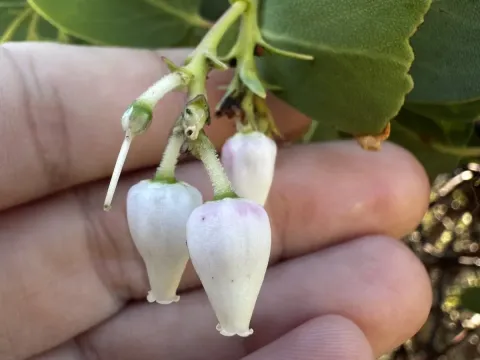
Bigberry manzanita
Arctostaphylos glauca
The Bigberry manzanita (Arctostaphylos glauca) is a prominent evergreen shrub belonging to the Ericaceae family. Native to California, this plant is well-adapted to Mediterranean climates characterized by long, dry summers and mild, wet winters.
What the section contains
Bigberry manzanita
Soil requirements for this species are specific; it thrives in well-drained, rocky, or sandy soils. It is highly intolerant of waterlogged conditions, which frequently lead to root decay and the death of the specimen.
Environmental conditions must include full sun exposure. The Bigberry manzanita requires intense solar radiation to maintain its structural integrity and prevent the development of opportunistic fungal pathogens.
Agronomic management involves minimal water application. As a drought-tolerant xerophyte, it survives on natural precipitation cycles and requires supplemental irrigation only during prolonged periods of extreme heat in the early establishment phase.
The plant is primarily utilized for ornamental purposes in xeriscaping, providing erosion control on steep hillsides and contributing to biodiversity in native plant restoration projects.
Root rot is the most significant threat to the Bigberry manzanita. Pathogens such as Phytophthora thrive when the soil remains moist for extended periods, necessitating perfect drainage.
Foliar diseases, including various leaf spots, may manifest if the air circulation around the canopy is restricted, especially in environments with high humidity.
Pests like scale insects and aphids can infest the branches. Integrated pest management techniques, such as applying horticultural oils, are effective if outbreaks occur.
Management of these threats relies heavily on proper site selection and spacing, which ensures that the plant remains vigorous and resistant to stress-induced conditions.
In conclusion, keeping the plant healthy requires replicating its native wild conditions, effectively avoiding the common pitfalls of over-nurturing and excessive irrigation.