
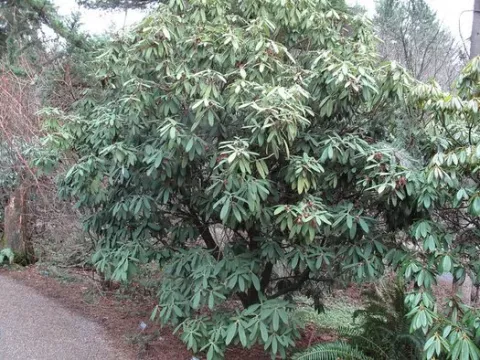
Silver-leaved rhododendron
Rhododendron argyrophyllum
The silver-leaved rhododendron (Rhododendron argyrophyllum) is a distinct species within the Ericaceae family, widely recognized for its elegant foliage adorned with silvery indumentum on the underside of the leaves.
What the section contains
Silver-leaved rhododendron
Originating from the mountainous forests of China, this shrub thrives in cool, humid environments with acidic, well-draining soil rich in organic matter. Maintaining a soil pH between 4.5 and 5.5 is essential for optimal nutrient absorption.
In a landscape setting, it is best placed in partial shade where it is protected from harsh midday sun and strong, drying winds. Proper site selection prevents leaf scorch and promotes healthy growth during the active season.
Cultural practices include consistent but light watering to keep the root ball moist without creating waterlogged conditions. The use of an organic mulch, such as pine bark, is highly recommended to protect shallow roots and preserve humidity.
This shrub is primarily valued for its ornamental characteristics, serving as a focal point in specialized gardens, woodland settings, or collections of Ericaceous plants.
Common pathological threats include fungal infections such as Phytophthora root rot and leaf spot, which are frequently triggered by poor soil aeration and excessive stagnant water around the roots.
Insect pests such as the rhododendron leafhopper and spider mites are known to infest the foliage, often causing chlorosis, stunted growth, and a general decline in the plant's aesthetic vitality.
Integrated disease management involves applying fungicides at the first sign of symptoms and ensuring that the planting site has excellent drainage to prevent the spread of soil-borne pathogens.
Pest control should focus on regular inspections of the leaf undersides, followed by the application of horticultural soaps or systemic insecticides if infestations are detected.
- Maintain proper spacing for air circulation.
- Ensure irrigation water is low in minerals.
- Remove fallen leaves to prevent fungal spore buildup.