
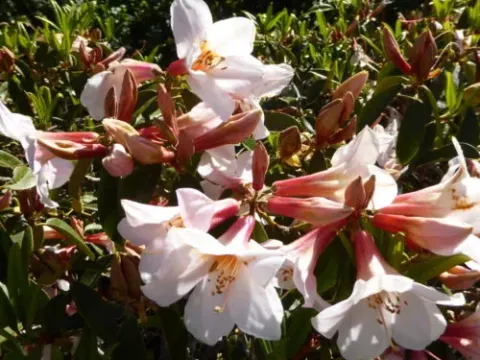
Shweli rhododendron
Rhododendron shweliense
The Shweli rhododendron (Rhododendron shweliense) belongs to the Ericaceae family, known for its elegant foliage and distinctively delicate inflorescences. This species is highly regarded by botanical collectors for its specific aesthetic features and compact growth habit suitable for alpine or woodland garden settings.
What the section contains
Shweli rhododendron
Originating from the mountainous regions of Southwest China and the adjacent areas of Myanmar, the plant is naturally adapted to cool, humid environments. Understanding its native habitat is crucial for successful cultivation, as it reflects the plant's sensitivity to temperature fluctuations and atmospheric moisture levels.
Soil conditions are the most critical factor for the Shweli rhododendron. It requires acidic, well-draining, and nutrient-rich soil, typically enhanced with peat, pine bark, or leaf mold to mimic its natural substrate. Poor drainage will inevitably lead to root health issues, necessitating a well-designed drainage system.
Regarding light requirements, this species thrives in dappled shade. Protection from the intensity of the afternoon sun is essential to prevent leaf scorching and to maintain the plant's vigor. It is best situated in sheltered areas where the air remains cool and moist throughout the growing season.
Maintenance involves diligent mulching with organic materials to retain moisture and keep the root zone cool. Fertilization must be done carefully using specialized ericaceous fertilizers, avoiding any compounds that contain lime, as the plant is an obligate acidophile that cannot tolerate alkaline conditions.
The primary pathological threats include phytophthora root rot and various foliar fungal infections. These are often exacerbated by poor air circulation and excessive moisture, emphasizing the need for a well-ventilated planting site and precise irrigation management to keep the foliage dry.
Insect pests, such as rhododendron bugs and spider mites, can become a problem in drier environments or during intense heat. Early detection via regular leaf inspection is recommended, followed by the application of horticultural oils or approved insecticides if a population buildup occurs.