
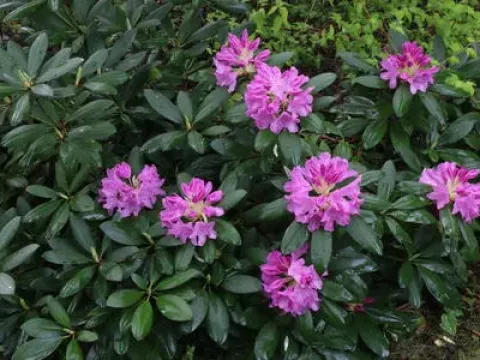
Smirnow's rhododendron
Rhododendron smirnowii
Smirnow's rhododendron (Rhododendron smirnowii) is a prominent evergreen shrub belonging to the Ericaceae family. It originates from the high-altitude forests of the Caucasus region and northeastern Turkey.
What the section contains
Smirnow's rhododendron
To thrive, the plant requires acidic, well-drained soil rich in organic matter. It is sensitive to waterlogged conditions, so appropriate site drainage is crucial for its long-term survival in garden settings.
The climate requirements involve partial shade and protection from harsh winter winds, which can easily dehydrate the leathery leaves. A temperate environment with sufficient atmospheric humidity is ideal.
Agricultural practices should prioritize consistent soil moisture. Applying mulch, such as pine needles or wood chips, is essential to regulate soil temperature and maintain the required acidity levels.
The shrub is highly valued for its aesthetic appeal, featuring beautiful rose-colored inflorescences and dense foliage that provides year-round color in woodland or shade garden designs.
Pests such as the rhododendron bug and spider mites are common threats that feed on leaf tissue, leading to discoloration, loss of vigor, and potentially plant decline if left untreated.
Fungal diseases like phytophthora root rot are common in poorly drained soils. Symptoms typically include wilting, chlorosis, and the sudden dieback of stems or entire branches.
Preventative measures involve maintaining a clean growing area, removing fallen debris, and ensuring proper airflow between plants to prevent the buildup of fungal spores in humid weather.
Systemic fungicides and insecticidal soaps are recommended for targeted control during the active growth phases if an infestation or infection is detected through regular scouting.
Careful attention to watering practices—specifically avoiding overhead irrigation during the heat of the day—helps reduce the susceptibility of the foliage to leaf spot pathogens.