
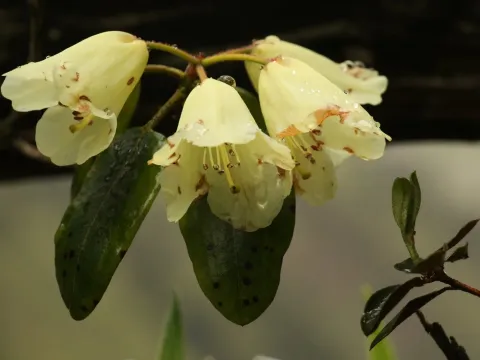
Rhododendron campylocarpum
Rhododendron campylocarpum
Rhododendron campylocarpum is a beautiful evergreen shrub belonging to the Ericaceae family. Native to the high-altitude regions of the Himalayas, including Nepal and Sikkim, it is valued by gardeners for its elegant bell-shaped, yellow flowers and compact growth habit.
What the section contains
Rhododendron campylocarpum
To cultivate this plant successfully, one must mimic its natural alpine environment. It thrives in cool, moist climates with partial shade, avoiding direct, harsh afternoon sun which can scorch the foliage and dry out the delicate root system.
The soil requirements for this species are specific: it strictly demands acidic, well-draining soil rich in organic matter. A pH level between 4.5 and 5.5 is essential to prevent iron deficiency and ensure healthy nutrient uptake for the plant.
Water management is critical. Rhododendrons have shallow, fibrous root systems that must never be allowed to dry out completely. Regular irrigation with rainwater is preferred, as it lacks the lime content that can quickly raise soil pH and harm the plant.
Mulching is a standard practice in the cultivation of R. campylocarpum. Applying a layer of pine needles, peat, or wood chips helps retain moisture, suppresses weeds, and protects the surface roots from sudden temperature fluctuations.
Root rot, primarily caused by Phytophthora species, is the most severe threat to the plant. It occurs predominantly in waterlogged soil where aeration is poor, leading to the decay of the root system and eventual death of the shrub.
Pest issues often include the rhododendron bug and spider mites. These pests feed on the undersides of leaves, causing silvery discoloration and stippling, which severely impacts the plant's overall health and decorative value.
Fungal leaf spots are common when humidity is high and airflow within the shrub is restricted. Proper pruning and thinning of the center of the plant can significantly reduce the incidence of such diseases.
Nutrient deficiencies, particularly chlorosis, are common when the soil becomes too alkaline. Symptoms include yellowing of leaves while veins remain green, requiring the application of iron chelates to correct the imbalance.
Vigilance and regular monitoring are essential. Integrating biological controls or using appropriate systemic pesticides during the early stages of infestation is the most effective strategy for maintaining a healthy rhododendron collection.